

Key Takeaways
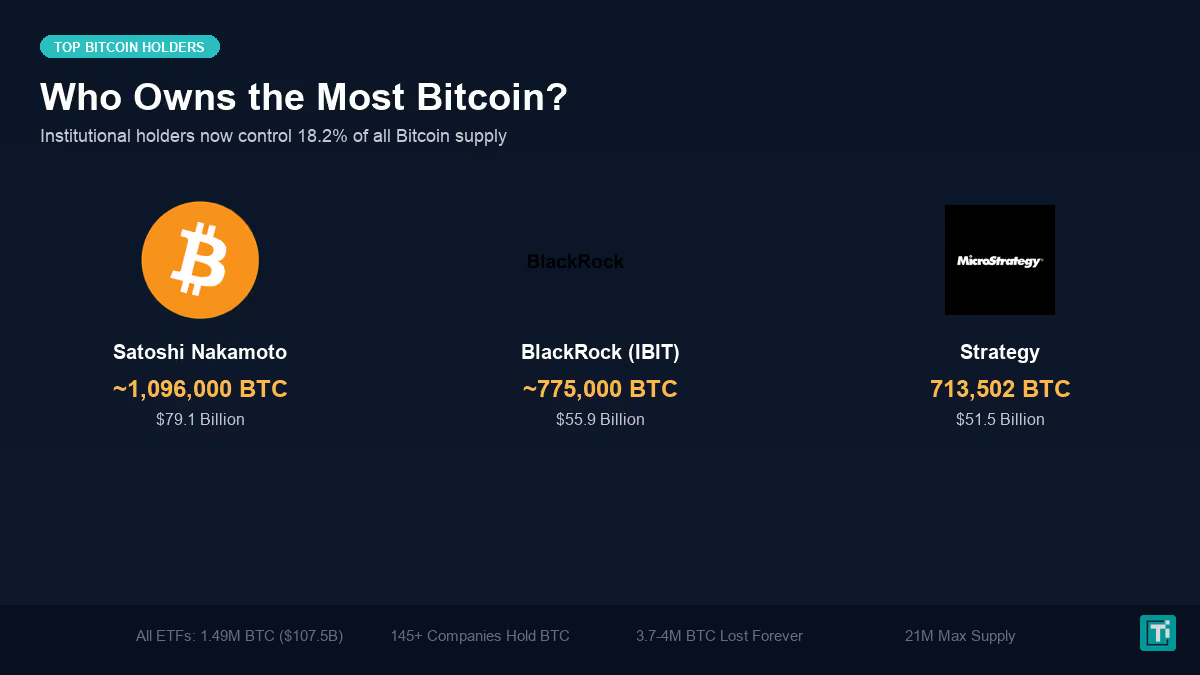
- Largest IndividualSatoshi Nakamoto holds ~1.1M BTC ($79B) — none has ever moved. This dormant fortune effectively reduces circulating supply.
- ETFs Surpass Satoshi12 U.S. spot Bitcoin ETFs collectively hold 1.29M BTC ($93B), led by BlackRock IBIT with ~785K BTC. ETFs absorb more daily than miners produce.
- Corporate LeaderStrategy (MicroStrategy) owns 766,970 BTC at ~$75K avg cost, sitting slightly below breakeven. It kept buying weekly through early 2026.
- Lost BitcoinAn estimated 3.7-4M BTC are permanently lost, reducing effective supply to ~17M. Institutional holdings represent ~22.5% of recoverable Bitcoin.
- Government ShiftThe U.S. Strategic Bitcoin Reserve (March 2025 executive order) transformed the government from a seller to a holder of 200K+ BTC.
Satoshi Nakamoto still controls more Bitcoin than any single entity on Earth — roughly 1.1 million BTC worth $79 billion at current prices, none of which has ever moved. But the real story of Bitcoin ownership in 2026 is happening in corporate boardrooms and Wall Street trading desks. Spot Bitcoin ETFs now collectively hold 1.29 million BTC, surpassing even Satoshi's legendary stash. Strategy (formerly MicroStrategy) has accumulated 766,970 BTC through relentless weekly purchases. And 253 tracked entities now control 3.83 million BTC — 18.2% of all Bitcoin that will ever exist. Subtract the estimated 3–4 million coins lost forever, and institutional players control closer to a third of all spendable Bitcoin. That concentration has profound implications for every Bitcoin investor trying to understand where the price goes next.
Top Bitcoin Holders: Complete Ranking
Rank | Entity | Type | BTC Holdings | Value (at $72,172) |
|---|---|---|---|---|
1 | Satoshi Nakamoto | Individual (pseudonymous) | ~1,096,000 | ~$79.1B |
2 | Coinbase (custodial) | Exchange / Custodian | ~973,000 | ~$70.2B |
3 | BlackRock (IBIT) | Spot Bitcoin ETF | ~785,000 | ~$56.7B |
4 | Strategy (MicroStrategy) | Corporate Treasury | 766,970 | ~$55.4B |
5 | Binance | Exchange | ~629,000 | ~$45.4B |
6 | Governments (combined) | Sovereign | ~518,000 | ~$37.4B |
7 | Grayscale (GBTC) | Bitcoin Trust / ETF | ~154,000 | ~$11.1B |
Sources:
Bitbo Bitcoin Treasuries
,
The Block ETF Tracker
. Values calculated at BTC price of $72,172 (April 9, 2026). Coinbase and Binance figures include custodial/user funds.
Satoshi Nakamoto: The Untouchable Fortune
Between January 2009 and mid-2010, Bitcoin's pseudonymous creator mined approximately 1.1 million BTC using nothing more than a standard CPU, back when mining difficulty was negligible and virtually nobody else was paying attention. At the current price of $72,172, that stash is worth roughly $79 billion, a fortune that has never been spent, moved, or even partially liquidated.
Researchers at BitMEX Research and Arkham Intelligence have used block-pattern analysis (the so-called "Patoshi pattern") to identify Satoshi's mining output. The coins sit across thousands of wallet addresses, generating roughly 50 BTC per block during the earliest days of the network. None have ever moved. That immobility is itself a data point: if Satoshi were alive and intended to sell, even a partial liquidation of 50,000 BTC would crash the market. The dormancy of these coins effectively removes them from circulating supply, making Bitcoin scarcer than the 21-million cap suggests.
Spot Bitcoin ETFs: The New Institutional Gatekeepers
The 12 U.S. spot Bitcoin ETFs approved in January 2024 have collectively amassed approximately 1.29 million BTC — approaching Satoshi Nakamoto's estimated holdings — in barely two years of trading. That accumulation rate is staggering: ETFs absorbed roughly 2,000 BTC per day during peak inflow periods, several times the ~450 BTC created daily through mining.
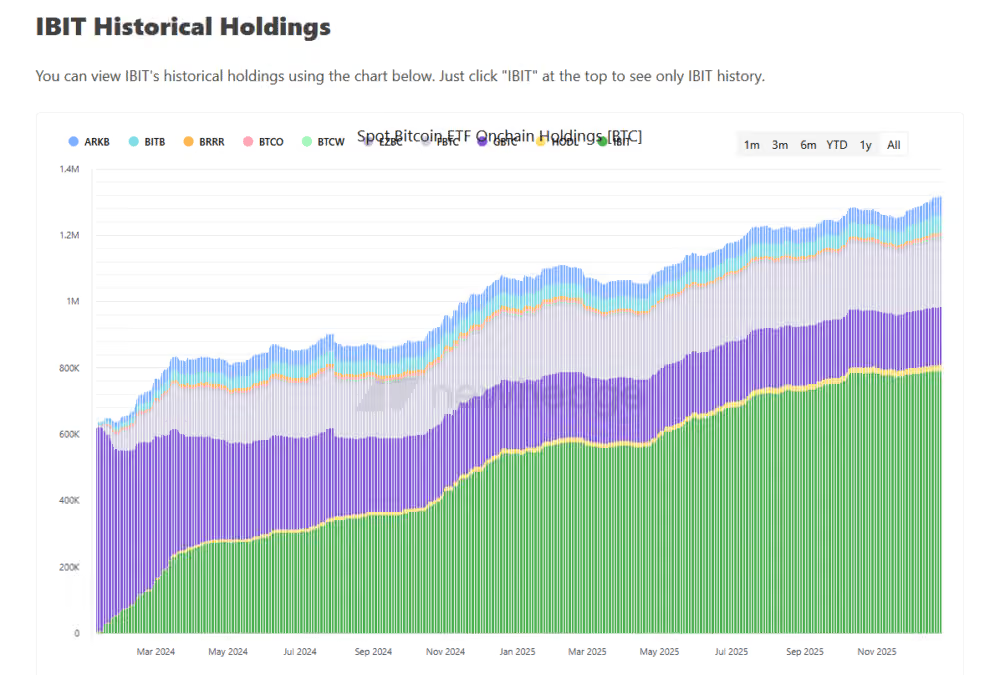
BlackRock's iShares Bitcoin Trust (IBIT) leads the pack with approximately 785,000 BTC (~$56.7 billion AUM), making it the single largest institutional Bitcoin holder on Earth. IBIT reached this milestone faster than any ETF in history, surpassing the accumulated holdings of Grayscale's decade-old GBTC within its first year.
The ETF trajectory raises a critical question: at the current accumulation pace, spot ETFs could collectively hold 1.8 million BTC by late 2027, which would represent nearly 10% of Bitcoin's total supply. That level of institutional custody fundamentally changes market structure, reducing the free-float available for trading and creating structural price support during drawdowns. For deeper analysis of how ETF flows affect price, see the Bitcoin price prediction page.
Corporate Treasuries: Strategy Leads the Pack
Public and private companies collectively hold approximately 1.12 million BTC ($80.8 billion) in corporate treasuries, according to Bitbo's treasury tracker. The corporate Bitcoin movement began as a fringe experiment and has become a legitimate treasury management strategy adopted by over 145 companies worldwide.
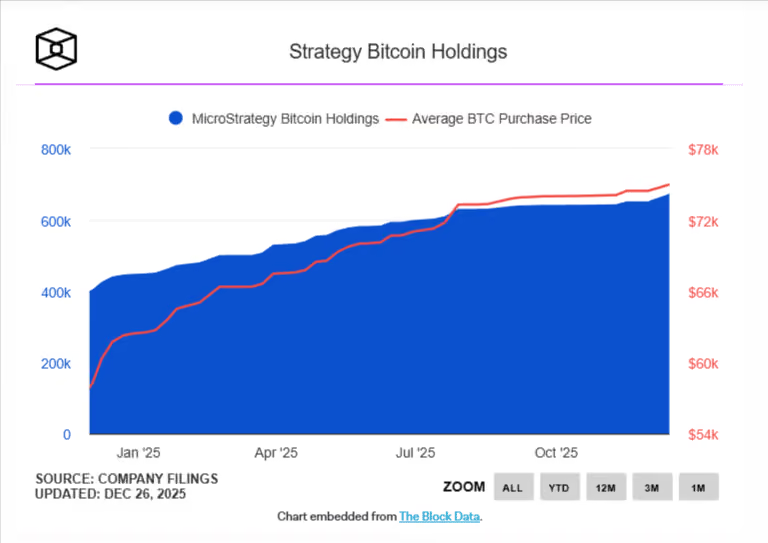
Strategy (formerly MicroStrategy) is the undisputed leader with 766,970 BTC purchased for approximately $58 billion (average cost ~$75,700 per BTC). CEO Michael Saylor's conviction trade, which began in August 2020 with a $250 million initial purchase, has turned the enterprise software company into the world's largest corporate Bitcoin proxy. Strategy funds its purchases through a combination of convertible note offerings, at-the-market stock sales, and preferred equity issuances. At the current BTC price of $72,172, Strategy's position sits modestly underwater relative to its average cost basis. And Saylor has kept buying: the company added more than 40,000 BTC in January 2026 alone before slowing the pace.
Other notable corporate holders include Tesla (which holds approximately 11,500 BTC after selling roughly 75% of its original position in 2022), Marathon Digital and Riot Platforms (Bitcoin miners who retain a portion of mined coins on their balance sheets), and Block (formerly Square), which holds BTC as part of its Cash App ecosystem strategy. The trend is accelerating: companies that once dismissed Bitcoin as speculative are now evaluating it as a treasury diversification tool, particularly as gold prices hit record highs and dollar-denominated reserves face inflation erosion.
Crypto Exchanges: Coinbase and Binance
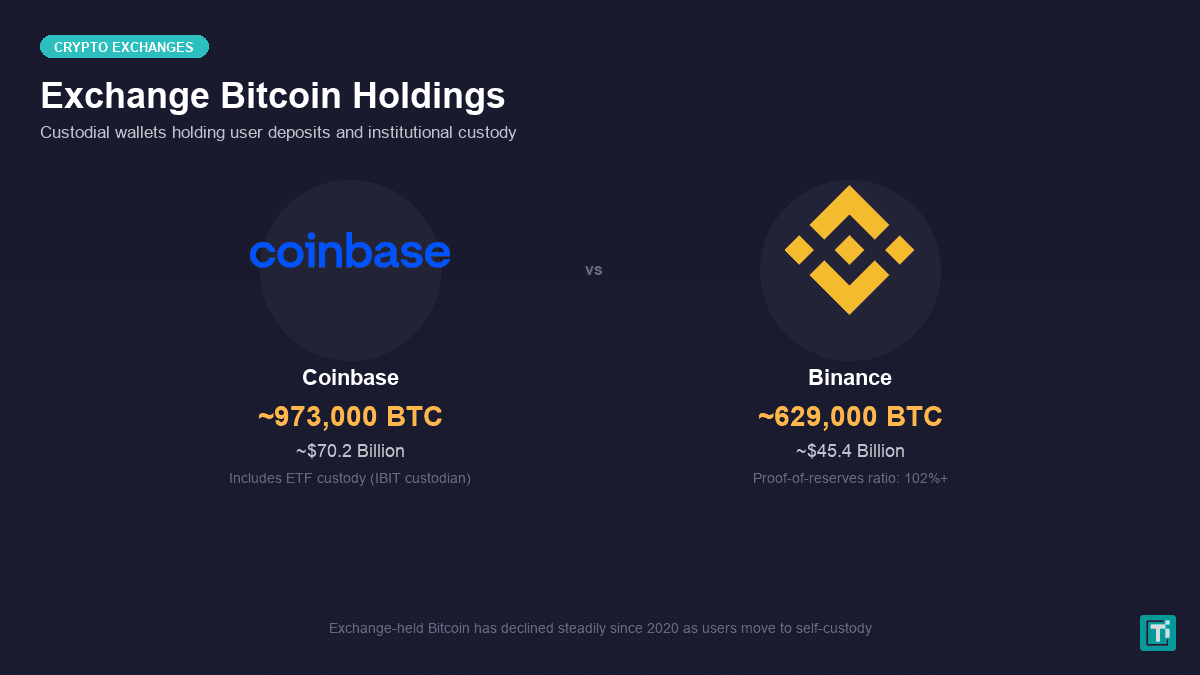
Crypto exchanges hold vast quantities of Bitcoin in custodial wallets on behalf of their users, making them some of the largest BTC holders by address — though this Bitcoin belongs to depositors, not the exchanges themselves.
Coinbase is the largest custodian with approximately 973,000 BTC under management (~$70.2 billion). This figure includes both retail user deposits and institutional custody through Coinbase Custody, which serves as the custodian for several spot Bitcoin ETFs including BlackRock's IBIT. Coinbase's dual role as both an exchange and an ETF custodian makes it the single most systemically important entity in Bitcoin infrastructure.
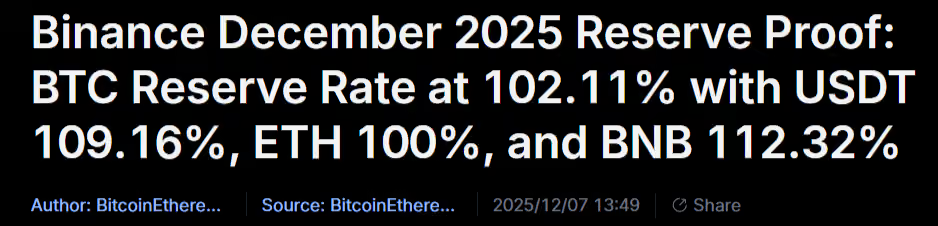
Binance holds approximately 629,000 BTC (~$45.4 billion) in user deposits and maintains a proof-of-reserves ratio above 100%, meaning the exchange holds more BTC than it owes to depositors. After the FTX collapse in November 2022 revealed massive reserve shortfalls, proof-of-reserves became an industry standard. Binance has published regular attestations since December 2022.
Exchange-held Bitcoin has been declining steadily since 2020 as users move coins to self-custody or institutional custody solutions. This "exchange exodus" is generally considered bullish: coins leaving exchanges reduce immediately available selling pressure and signal long-term holder conviction.
Government Holdings: Seizures and Strategic Reserves
Governments collectively hold approximately 518,000 BTC ($37.4 billion), but it is crucial to distinguish between two very different categories of sovereign Bitcoin: coins seized through law enforcement and coins held as deliberate strategic reserves.
The United States government holds the largest sovereign Bitcoin position, estimated at over 200,000 BTC accumulated primarily through criminal seizures from Silk Road, the Bitfinex hack recovery, and other federal cases. In March 2025, President Trump signed an executive order establishing the Strategic Bitcoin Reserve, directing the government to retain seized Bitcoin rather than auctioning it through the U.S. Marshals Service as had been the practice. The policy shift transformed the U.S. government from a periodic seller into a permanent holder.
El Salvador, the first country to adopt Bitcoin as legal tender in September 2021, holds approximately 6,000 BTC purchased through regular daily buys. Bhutan has accumulated Bitcoin through state-run hydroelectric mining operations. China holds an estimated 190,000 BTC from seizures related to the PlusToken Ponzi scheme, though the government's stance on crypto remains hostile.
Germany's BKA (Federal Criminal Police Office) provided a cautionary tale in 2024 when it sold approximately 50,000 BTC seized from a piracy operation, temporarily depressing the market. The contrast with the U.S. Strategic Bitcoin Reserve approach illustrates how government policy toward seized crypto can have meaningful market impact.
The Lost Bitcoin Factor: Why Supply Is Smaller Than You Think
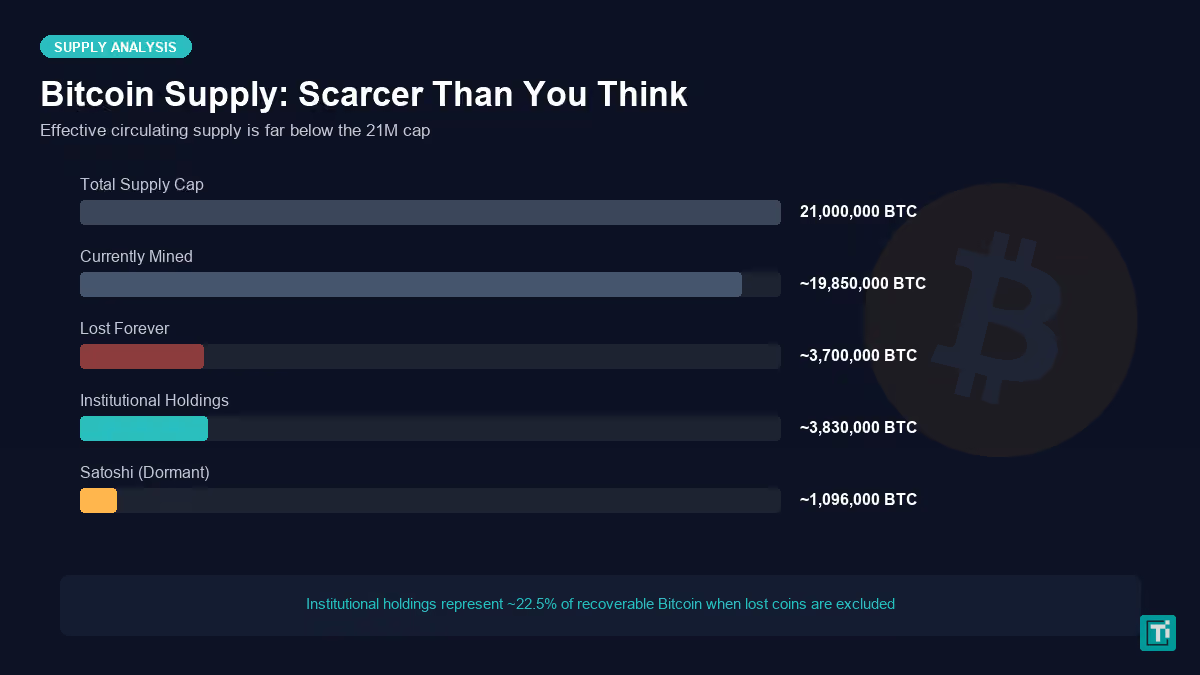
Bitcoin's 21-million hard cap is the most cited number in crypto, but the effective circulating supply is significantly smaller. Chainalysis estimates that between 3.7 and 4 million BTC are permanently lost — locked in wallets whose private keys were destroyed, discarded, or forgotten. That reduces the effective maximum supply to roughly 17 million coins.
When you recalculate concentration against this adjusted supply, the numbers become more striking. The 3.83 million BTC held by tracked institutional entities represents not 18.2% of total supply, but closer to 22.5% of all recoverable Bitcoin. Add Satoshi's dormant coins (which function as lost supply from a market perspective), and accessible Bitcoin drops further. The practical implication: every new ETF inflow, every Strategy weekly purchase, and every government decision to hold rather than sell is removing coins from an already-constrained liquid supply. That structural scarcity is the foundation of the long-term bull case for Bitcoin.
What Bitcoin Concentration Means for Investors
The shift from retail-dominated to institutionally-dominated Bitcoin ownership has three practical consequences for anyone investing in BTC today.
Volatility may decrease over time. Institutions operate on longer time horizons than retail traders. Strategy is not selling during a 40% drawdown, and BlackRock's ETF investors tend to hold through volatility. As institutional share of ownership grows, panic-selling episodes may become shorter and shallower than in prior cycles.
Supply squeezes could become more severe. When 18%+ of supply is locked in institutional custody with no intention of selling, and another 4 million coins are permanently lost, the available float for trading shrinks. Any surge in demand — whether from a broader market risk-on rotation, another country adopting a Strategic Bitcoin Reserve, or simple retail FOMO — hits a thinner order book. The resulting price moves could be more explosive than historical precedent suggests.
Custodial risk is concentrating. Coinbase now custodies both exchange deposits and multiple ETF holdings, meaning a security breach or regulatory action against a single entity could affect billions in Bitcoin. Diversification of custody providers, and the growth of self-custody solutions, remains an important infrastructure development to watch.
For live Bitcoin pricing and daily market analysis, see Bitcoin Price Today. For long-term outlook and forecasts, read the Bitcoin Price Prediction 2026 guide.

Disclaimer
This article is for informational purposes only and does not constitute financial, investment, tax, or legal advice. Market data, tax rules, and prices can change after the article date. TECHi and its authors may hold positions in securities or digital assets mentioned. Always conduct your own research and consult a licensed financial, tax, or legal professional before making decisions.






Comments