

A Waymo robotaxi on a street in the Los Angeles area. Waymo's street service continues while its freeway rides are paused. Photo: Anil Baki Durmus / Unsplash.
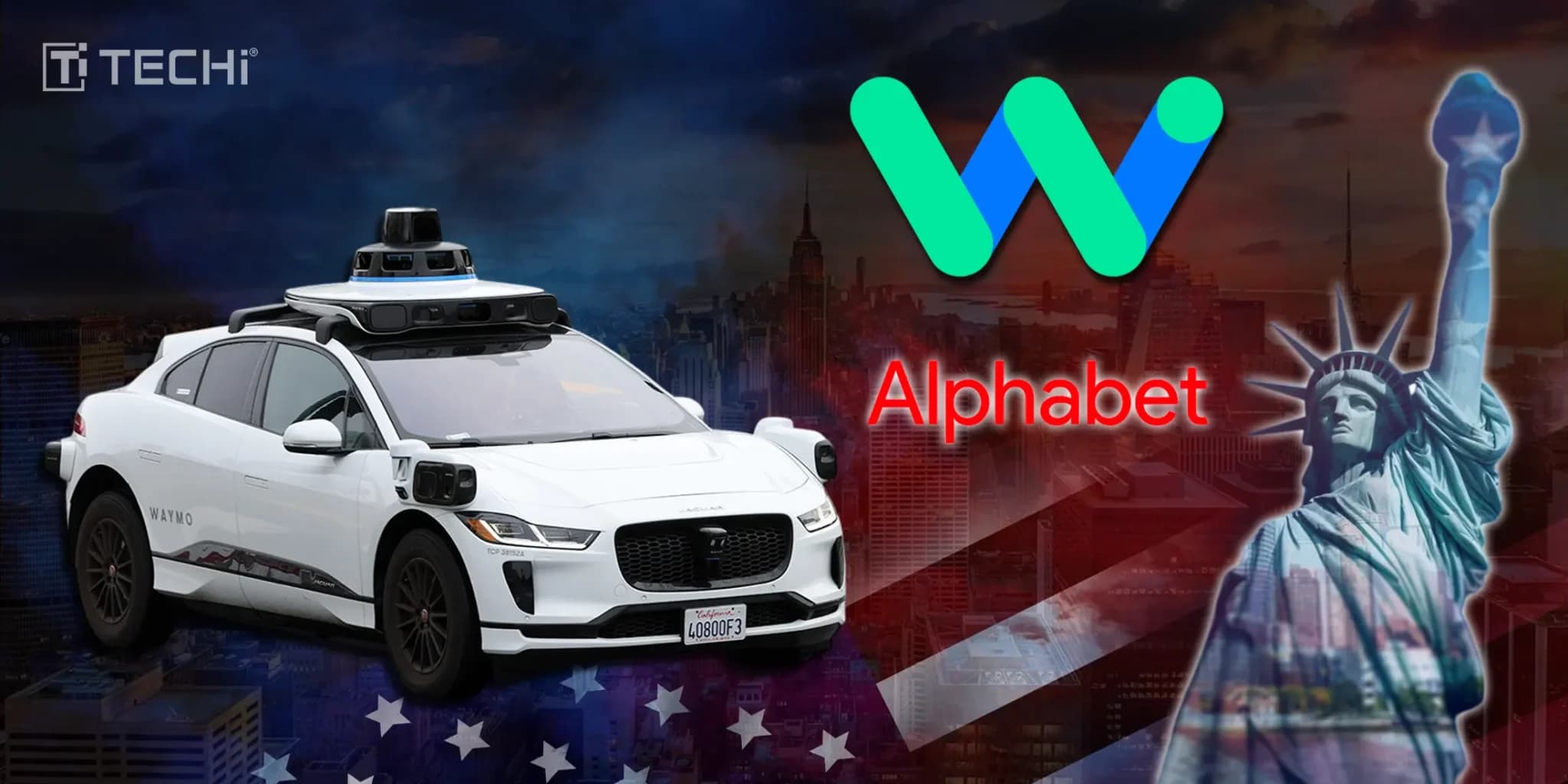
Waymo has stopped carrying passengers on freeways in every US market after California's Department of Motor Vehicles banned its driverless cars from the state's freeways, NBC News and Wired reported on Tuesday, November 17, 2026. The DMV said the cars pose "an imminent hazard to public safety" after two incidents near San Francisco. Waymo is owned by Alphabet.
For Alphabet's shareholders the direct money is small. Waymo sits in a segment called Other Bets, which brought in $372 million last quarter, 0.3% of Alphabet's revenue, and lost $2.05 billion, according to the company's quarterly report. That is $5.50 lost for every dollar of sales, TECHi's calculation shows. The same report shows Waymo arranged a $5 billion loan in October on its own credit, without a guarantee from its parent.
Key Takeaways
- The banCalifornia’s DMV banned Waymo’s driverless cars from state freeways, citing vehicles entering active construction zones.
- The pauseWaymo stopped freeway rides in all of its markets. Street service continues in 15 metropolitan areas.
- The sizeOther Bets, the Alphabet segment that holds Waymo, had revenue of $372 million last quarter, 0.3% of the company’s total.
- The lossThe segment lost $2.05 billion in the quarter, or $5.50 for every dollar of sales.
- The loanWaymo arranged a $5 billion secured loan in October that Alphabet does not guarantee.
What did California do?
The DMV issued the ban on November 11, according to NBC News, and it became public on Tuesday. The department cited two recent incidents. In one, three Waymo vehicles drove into an active construction closure on Route 101 on the San Francisco Peninsula, Wired reported. In the other, a Waymo car tried to pass California Highway Patrol officers who were holding back traffic on a San Francisco freeway while a crash was cleared.
The department's reasoning, as quoted by NBC News, is that Waymo's driverless freeway operations are a hazard because its vehicles keep entering active construction zones where workers and equipment are present. It said it had placed similar restrictions on the company after similar incidents earlier this year.
There is no end date. A DMV spokesperson told Wired the ban stays until Waymo shows it has taken effective corrective action. The National Highway Traffic Safety Administration said it is in contact with the DMV and with Waymo and will take further action as appropriate, NBC News reported.
What did Waymo do?
It went further than the order required. California's ban covers California. Waymo paused freeway routes in all of its markets, and described the step as its own decision. The company said the restriction applies only to freeway service and that it is working to reopen those routes quickly and safely.
Rides on ordinary streets continue in the 15 metropolitan areas where Waymo operates, including parts of Los Angeles, San Diego and the San Francisco Bay Area, according to Wired. Waymo will keep testing on highways with a safety operator behind the wheel. The company pointed out that the construction zone incidents caused no injuries or collisions.
This is not the first time. Waymo began carrying passengers on freeways last year. In June it recalled the software in more than 3,800 robotaxis after at least 13 cases of cars driving into highway construction zones, six in Phoenix in April and seven in San Francisco in May, ABC7 News reported at the time, citing the company and federal filings. Waymo restricted its freeway operations then too.
Federal regulators are also looking again at an older problem. The National Highway Traffic Safety Administration said last week that it is examining whether a software fix Waymo made after its cars passed stopped school buses has worked, Wired reported. TECHi wrote about that problem last year.
Freeways matter to the business because they shorten longer trips, the kind that link suburbs, airports and city centers. A robotaxi that must stay on surface streets takes longer and serves a smaller area.
How big is Waymo inside Alphabet?
Alphabet does not report Waymo's results separately. It reports Other Bets, a group of smaller businesses whose revenue, the filing says, comes mainly from autonomous transportation services and internet services.
In the three months to September 30, Other Bets had revenue of $372 million, up 8% from a year earlier. Alphabet's total revenue was $127.6 billion, up 25%. Other Bets was 0.29% of the total.
The losses are a different size. Other Bets lost $2.05 billion in the quarter, up 44% from $1.43 billion a year earlier. Over nine months it lost $5.95 billion on revenue of $1.17 billion, and that revenue was flat against the same period of 2025. Alphabet put the larger loss down mainly to employee pay.
Set against the whole company, the loss is manageable. Alphabet's operating income in the quarter was $40.6 billion, so Other Bets consumed about 5% of it. Google Cloud's operating profit alone, $11.1 billion, covers the Other Bets loss more than five times.
| Measure | Third quarter of 2026 | A year earlier |
|---|---|---|
| Other Bets revenue | $372M | $344M |
| Other Bets operating loss | $2.05B | $1.43B |
| Loss per dollar of revenue | $5.50 | $4.15 |
| Alphabet revenue | $127.6B | $102.3B |
| Other Bets share of revenue | 0.29% | 0.34% |
| Alphabet operating income | $40.6B | $31.2B |
| Other Bets loss as a share of operating income | 5.0% | 4.6% |
Why does the $5 billion loan matter?
The detail that makes the ban more than a local story is in Alphabet's notes on debt. In October, Waymo signed a credit agreement for a $5.0 billion senior secured term loan that matures in October 2032. The interest rate is a benchmark rate plus 5.25 percentage points. The loan is secured on some of Waymo's own assets and subsidiaries, and Alphabet says neither it nor its other subsidiaries guarantee it.
That is the borrowing of a company expected to stand on its own. Alphabet itself raised $28.7 billion in the third quarter through unsecured notes.
On the full $5 billion, the margin alone would cost $262.5 million a year. That is 71% of what all of Other Bets earned in revenue last quarter, or about 18% of its revenue at an annual pace. Lenders who priced that loan in October now face a borrower whose home-state regulator has taken its cars off the freeway, at least for now.
Alphabet's report also shows outside money in its subsidiaries growing. Noncontrolling interests, the stakes other investors hold in businesses Alphabet controls, rose to $6.9 billion at the end of September from $3.4 billion at the start of the year. The report gives the totals, and TECHi did not find a breakdown by subsidiary.
What does it mean for Alphabet stock?
Very little in the numbers, and possibly more in the story investors tell about the company.
Alphabet closed on Tuesday at $280.20, down 1.2% on the day and 5.3% over two sessions. It is down 10.5% this year and 30% below its closing high of $402.62 in May. On the share counts in its latest report the company is worth about $3.44 trillion. Alphabet has made no filing with the SEC about the ban. Its most recent current report is dated November 5.
Tuesday's fall took about $43 billion off that value. The whole of Other Bets, at last quarter's pace, brings in about $1.5 billion a year. A one-day move in the stock was worth 29 years of that revenue, and AI stocks fell broadly on Tuesday, so the ban cannot be read into the price.
The case for caring is that Waymo is Alphabet's most visible AI product outside search and cloud, and investors value it on what it might become. Freeway driving is part of that promise, and this is the second time in six months that construction zones have forced Waymo off the freeway. Its main rival for attention, Tesla, has its own gaps to close, as TECHi has reported.
The case against is scale. Street service continues in 15 metropolitan areas, Waymo says nobody was hurt in the construction zone incidents, and a business that is 0.3% of revenue cannot move Alphabet's earnings in either direction this year.
What to watch
The DMV decides when the ban ends, and it has set a test, not a date. Federal regulators may add steps of their own. Alphabet's next results, expected in late January or early February, will show whether Other Bets' revenue is still flat while its losses grow. TECHi's Alphabet quote page carries the live price.

Disclaimer
This article is for informational purposes only and does not constitute financial, investment, tax, or legal advice. Market data, tax rules, and prices can change after the article date. TECHi and its authors may hold positions in securities or digital assets mentioned. Always conduct your own research and consult a licensed financial, tax, or legal professional before making decisions.




Comments