



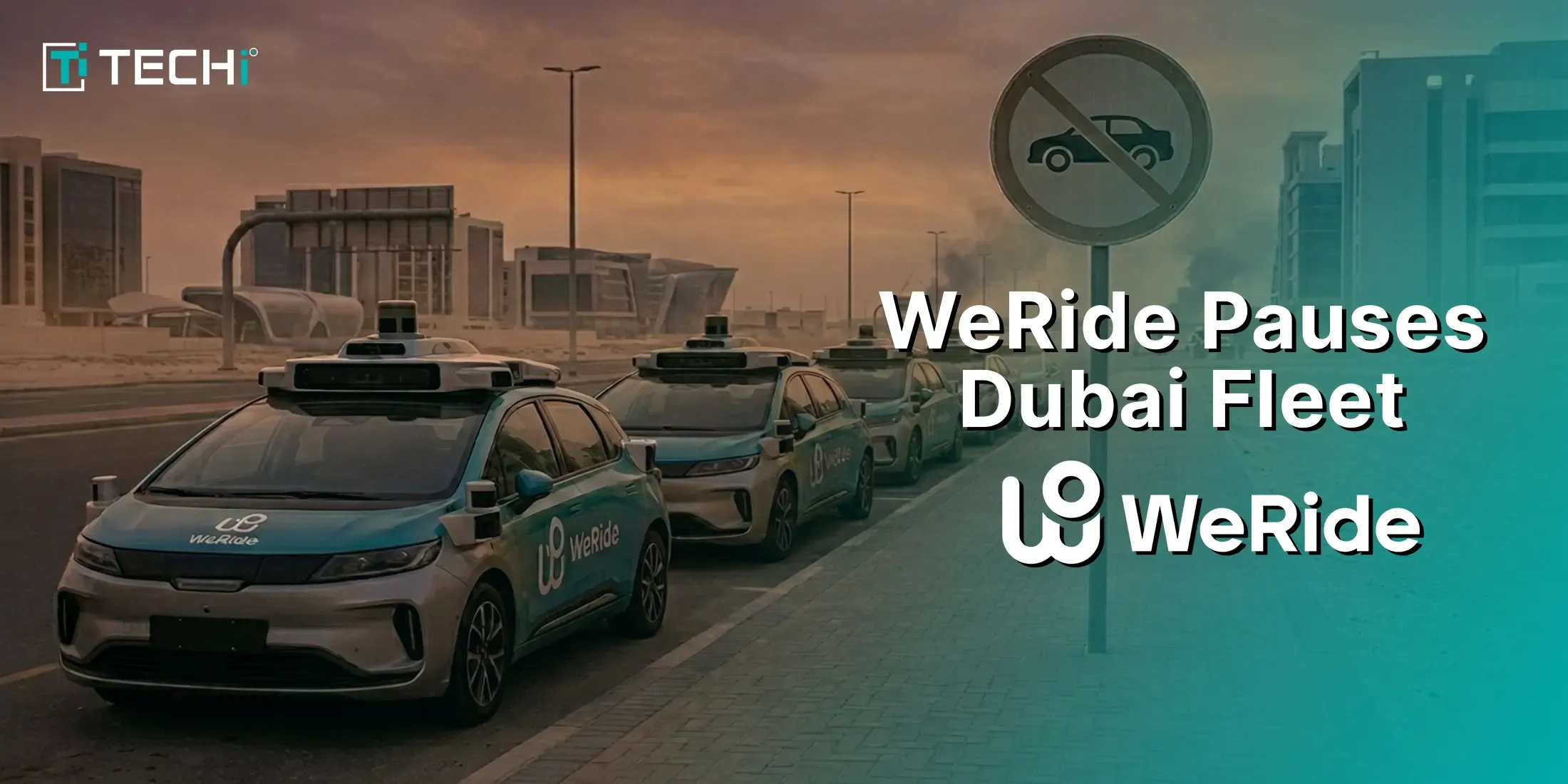
Escalating Middle East tensions have brought China’s robotaxi ambitions in the Gulf to a halt. Autonomous driving leader We Ride has just halted its entire fleet in Dubai as the conflict between the U.S. and Israel with Iran is going out of hand, thus interrupting the rise of the ride-hailing enterprise in the Gulf.
Gulf's Robotaxi Hotspot
The Gulf region has become a commercially viable market for Chinese pioneers of robotaxi. WeRide, which has been providing services in the region since 2021, is attracted by relatively relaxed regulatory regimes and the continuously increasing demand, with Dubai alone recording a 25% annual growth in ride-hailing journeys in 2025.
This January, Baidu Apollo Go started its commercial business in Abu Dhabi, and Pony.ai tested in Doha and Dubai. All of these businesses envision having about 1,200 robotaxis in the region by 2027 and tens of thousands by 2030, as per industry estimates. However, WeRide has not discontinued its fleets in Abu Dhabi and Riyadh, which are still running their public rides.
Safety First Amid Chaos
The safety of the staff is of the most important concern. WeRide instructed all regional workers to work at home, a factor that reduced the risk of Iranian drone attacks on its hubs, as Iranian strikes spread across the Gulf and three US F-15s were downed by Kuwaiti friendly fire on March 1.
The Apollo Go of Baidu is flexible in its operations and says, we are modifying services as required in close collaboration with local regulators. Pony.ai had earlier suspended tests in Dubai but started operations in Doha on Monday, and planned to reopen at an appropriate time. The trend is indicative of the larger regional spillovers, 30,000 displaced human beings in Lebanon, and IAEA-reported strikes near the Natanz nuclear facility.

Market Ripples and Analysis
We Ride NASDAQ: WRD, Baidu 9888.HK and Pony.ai PONY.O all saw their stocks fall 3-5% in reaction to the news, signs that investors are now worried about a Gulf exposure which today takes 15% of their global robotaxi-based revenues.
According to Tu Le, an analyst with Sino Auto Insights, geopolitical shocks reveal the weakness of autonomous vehicle development in high-growth markets with high instability. Iran’s actions are stretching U.S. air defenses thin, but the Gulf states are quickly enhancing their interceptors.
Path Forward
Robotaxi services will resume when tensions in the region decrease. Once a ceasefire is in place, companies plan a careful restart with added safety measures. If stability returns by late 2026, the industry might regain momentum.
However, firms should not rely only on the Gulf market, since potential renewed conflict could cause at least a 10-15% setback in 2027 forecasts.
Disclaimer
This article is for informational purposes only and does not constitute financial, investment, tax, or legal advice. Market data, tax rules, and prices can change after the article date. TECHi and its authors may hold positions in securities or digital assets mentioned. Always conduct your own research and consult a licensed financial, tax, or legal professional before making decisions.
About the Author

Layloma Rashid writes about AI platforms and the companies selling them, from OpenAI's new teen alert on ChatGPT and GPT-5.6's arrival on Amazon Bedrock to C3.ai's enterprise AI earnings. She also follows chip policy for TECHi, including how many Nvidia H200s are shipping to China.




Comments