

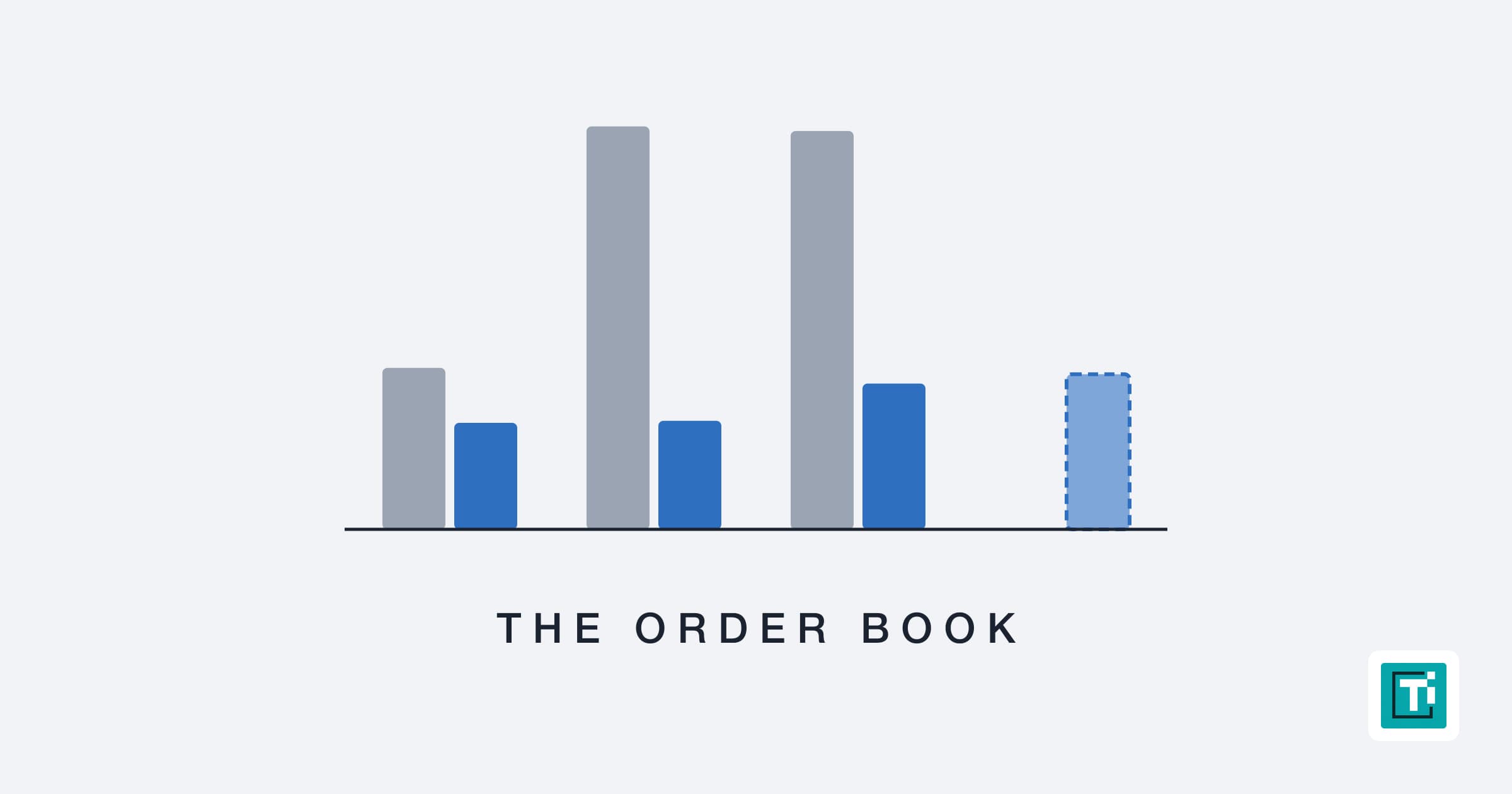
Editorial illustration drawn to scale from Workday's filing. Each bar is Workday's total subscription revenue backlog, a year earlier on the left and at October 31, 2026 on the right; the blue part is due in the next 12 months and the grey part later. The year-earlier split is worked back from the growth rates Workday reported. Illustration: TECHi.
Workday said on Tuesday, November 24, 2026, that new sales of its AI products more than tripled from a year earlier, but the part of its contracted revenue due beyond the next 12 months barely grew, and its shares fell after hours. The HR and finance software company reported results for the three months to October 31 in a filing with the SEC.
Its subscription revenue backlog for the next 12 months rose 12.3% to $9.22 billion, while the total backlog rose 6.1% to $27.55 billion. That leaves about $18.3 billion due after the coming year, up only about 3.2% from a year earlier, TECHi's calculation from the reported growth rates shows. The shares were down 6.8% at $167.00 in after-hours trading at 5:16 p.m. Eastern, according to CNBC quote data.
Key Takeaways
- The quarterRevenue rose 11.2% to $2.705 billion and subscription revenue 12.8% to $2.532 billion in the three months to October 31.
- AI salesNew AI contract value was nearly $150 million, more than three times a year earlier; over 2,200 core customers have bought an AI product.
- The backlogThe next-12-months backlog rose 12.3%, but the part due later, about $18.3 billion, rose only about 3.2%, TECHi calculates.
- The forecastFull-year subscription revenue guidance of $9.958 billion implies about $2.60 billion in the fourth quarter, 2.7% above the third.
- The sharesWorkday was 6.8% lower after hours, after closing 1.8% higher.
What did Workday report?
Steady growth and wider margins. Revenue rose 11.2% to $2.705 billion, and subscription revenue, which makes up most of the business, rose 12.8% to $2.532 billion. Operating income was $329 million, 12.1% of revenue, after $51 million of restructuring costs; on the adjusted basis Workday also reports, it was $850 million, or 31.4%, up from 28.5%.
Earnings were 96 cents a share, or $2.82 adjusted, up from $2.32. Cash from operations rose 25% to $735 million, and free cash flow was $691 million, against $550 million a year earlier. Workday bought back about 3.8 million shares for $750 million in the quarter and ended it with $5.64 billion in cash and marketable securities.
Where is the money going?
Less of it into growth than revenue would suggest. Spending on product development rose 7.2% to $714 million and on sales and marketing 8.9% to $737 million, both slower than revenue, while general and administrative costs fell 1.7%. Professional services revenue, from setting customers up, fell 8.0% to $173 million.
The $51 million of restructuring costs belong to a plan Workday adopted in September that covers job cuts and office space, according to its quarterly report. Over nine months, operating income rose to $979 million from $54 million, when restructuring costs were $172 million.
Workday is also borrowing more. In October it sold $2.5 billion of new notes due between 2029 and 2036 with coupons of 5.7% to 6.5%, taking the principal of its debt to $5.5 billion from $3.0 billion in January. In the same quarter it spent $750 million on buybacks. On TECHi's arithmetic, the four new notes carry an average coupon of about 6.1%, or roughly $150 million a year in interest, and $1.0 billion of older 3.5% notes falls due in April 2027.
What did it say about AI?
That it is selling more of it. Chief executive Aneel Bhusri said AI products brought in nearly $150 million of new annual contract value in the quarter, more than three times the figure a year earlier. More than 2,200 core customers have now bought at least one AI product, up nearly 25% from the previous quarter, the company said. It named Google, SMS Holdings and WPP among companies that have invested in its AI products.
The release lists a run of AI announcements: agents that handle routine HR, finance and IT tasks in the background, a partnership with Anthropic to bring Claude into its agents, an agent platform that customers can run with their own tools and models, and the purchase of C1.ai, an identity platform for people and AI agents. Its Sana assistant is now the home screen of the product and will also work inside Claude, Google's Gemini, Microsoft Copilot, Teams and Slack, the company said.
How big is AI for Workday so far?
Still small against the whole. Nearly $150 million of new AI contract value in a quarter is about 1.5% of the roughly $10.1 billion a year that subscription revenue now runs at, on TECHi's arithmetic. For another measure of scale, subscription revenue was $288 million higher than a year earlier in the quarter. The two numbers measure different things, contract value signed and revenue recognized, so they cannot be added or netted, but they show that AI is growing from a low base.
| Measure | Quarter to Oct 31, 2026 | Year earlier or change |
|---|---|---|
| Total revenue | $2.705 billion | +11.2% |
| Subscription revenue | $2.532 billion | +12.8% (from $2.244 billion) |
| Subscription backlog, next 12 months | $9.216 billion | +12.3% |
| Total subscription backlog | $27.548 billion | +6.1% |
| Backlog due after 12 months (TECHi calculation) | about $18.3 billion | about +3.2% |
| Adjusted operating margin | 31.4% | 28.5% |
| Free cash flow | $691 million | $550 million |
| New AI annual contract value | nearly $150 million | more than 3x |
What does the backlog say?
That near-term business is growing and long-term commitments are not keeping pace. Workday reports two backlog figures: subscription revenue it expects to recognize in the next 12 months, and its total contracted subscription revenue. Subtracting one from the other gives the part due after the next 12 months, about $18.3 billion. Working back from the growth rates Workday reported, the same figure was about $17.8 billion a year earlier, a rise of about 3.2%.
In dollars, the next-12-months backlog grew by about $1.01 billion over the year and the later part by about $0.57 billion, even though the later part is twice the size.
Longer-dated backlog can move with the timing of multi-year renewals, so one quarter is not a trend. But it is the part of the order book that reflects how far ahead customers are committing, and it grew far more slowly than revenue.
What did it forecast?
A little more for the year. Workday raised its forecast for subscription revenue in the fiscal year ending in January to $9.958 billion, growth of 13%, and its adjusted operating margin forecast to 31.5%. With $7.358 billion booked in the first nine months, that implies about $2.60 billion in the fourth quarter, 2.7% more than the third.
Against last year's fourth quarter, that works out to growth of roughly 11%, TECHi estimates, below the third quarter's 12.8%. Because Workday rounds the 13% full-year growth rate, the estimate could be anywhere from about 9% to 13%.
How did the shares react?
They fell after rising during the day. Workday closed at $179.23, up 1.8%, before the results, then traded at $167.00 after hours. The release does not comment on the share price, and TECHi has not attributed the move to a single figure.
Two other companies that reported at the same time moved less. Autodesk was down 3.8% after hours after raising the midpoints of its full-year forecasts, and HP Inc. was up 0.6%. Earlier in the evening, Dell's results showed a record AI backlog alongside slower growth implied for its next quarter, as TECHi reported.
What does it mean for shareholders?
There are two readings. One is that Workday is doing what investors in software companies have asked for: selling AI products in volume, widening margins and buying back shares, with a forecast raised again. The AI numbers are growing fast, from a low base, and more customers are paying for them each quarter.
The other is about durability. A longer-dated backlog growing about 3.2% while revenue grows 12.8% is the kind of figure investors watch for signs that customers are committing for shorter periods, and the release does not address it. Workday's quarterly report, filed the same day, gives more detail for investors to test either view.
What to watch
The conference call, and whether Workday explains the slower growth in its longer-dated backlog. Whether Wednesday's trading holds the after-hours fall. How Workday handles the $1.0 billion of notes due in April 2027. The fourth-quarter results, which will show whether subscription revenue reaches about $2.60 billion and how much of the AI contract value turns into revenue.

Disclaimer
This article is for informational purposes only and does not constitute financial, investment, tax, or legal advice. Market data, tax rules, and prices can change after the article date. TECHi and its authors may hold positions in securities or digital assets mentioned. Always conduct your own research and consult a licensed financial, tax, or legal professional before making decisions.


Comments