

NOIRLab HQ server racks in Tucson, Arizona. Photo: NOIRLab/NSF/AURA/T. Slovinský, CC BY 4.0, via Wikimedia Commons. Cropped and TECHi mark added. Source: https://commons.wikimedia.org/wiki/File:NOIRLab_HQ_Server_Racks_(6V6A0404-CC).jpg
Meta's September-quarter filing, accepted October 21, changed the scale of the cash question facing AI stocks before Microsoft, Alphabet and Amazon report this week. The amount of Meta's noncancelable contracts scheduled for payment in 2027 rose to $121.41 billion at September 30 from $81.65 billion at June 30. That is a $39.76 billion, or 48.7%, increase in the same calendar-year payment bucket in one quarter, based on TECHi's calculation from the two SEC filings and its June predecessor.
The change is a more useful question for investors than another debate over whether a large capital-expenditure number is “good” or “bad.” It asks whether future cash generation can grow quickly enough to meet commitments already disclosed, and whether the economics of AI products and cloud capacity become visible before those payments accelerate. It does not mean Meta will pay $121.41 billion of incremental cash in the current quarter. Nor is the entire amount an AI-only expense: Meta says its contracts also include Reality Labs consumer hardware.
The cash-payback test
- 2027 calendarMeta's disclosed noncancelable contracts due in 2027 rose $39.76 billion between its June and September filings.
- Different obligationsUncommenced leases and contractual commitments have distinct timing and accounting; neither is an AI-only bill payable now.
- Next evidenceMicrosoft, Alphabet and Amazon earnings will test whether demand, cash conversion and future payments are moving together.
The payment calendar moved faster than the headline capex number
Meta reported $454.52 billion of noncancelable contractual commitments at September 30, up from $349.31 billion at June 30. The $105.21 billion increase is a net change in a stock of future commitments, not a measure of cash spent during the quarter or a clean tally of contracts signed in those three months. It covers a mix of third-party cloud capacity, servers, network infrastructure, data-center energy services and Reality Labs hardware. The 2027 portion rose by $39.76 billion even as the amount due in the remainder of 2026 declined from $53.52 billion to $45.85 billion. A shift in timing is one possible contributor, but the filings do not provide a contract-by-contract bridge; the observed changes alone cannot establish why the buckets moved.
A second category requires its own line. Meta's September 10-Q lists $355.73 billion of leases that had not yet commenced, up from $278.99 billion at June 30. These are mainly data centers, energy-related infrastructure, colocations and network infrastructure, with starts scheduled across the remainder of 2026 through 2036 and terms as long as 30 years. The June filing had already disclosed roughly $68 billion of additional data-center leases entered in July; the September balance therefore should not be described as an entirely unexpected $76.74 billion of new signing. Lease commencements and other movements can also change this balance.
| Filing disclosure | June 30 | September 30 | Net change |
|---|---|---|---|
| Uncommenced leases | $278.99B | $355.73B | +$76.74B |
| Noncancelable contracts | $349.31B | $454.52B | +$105.21B |
| Contracts due in 2027 | $81.65B | $121.41B | +$39.76B |
| Contracts due in rest of 2026 | $53.52B | $45.85B | −$7.67B |
Taken together, the two September categories amount to $810.25 billion in a simple arithmetic sum, compared with $628.30 billion in June. That $181.95 billion net increase is striking, but the sum is not a bill payable today, a 2027 payment forecast, a balance-sheet liability, or a verified AI-only total. Different contracts have different payment schedules and accounting treatment, and combining categories can obscure overlap in what they ultimately fund. Meta separately disclosed up to $14.72 billion in contingent cloud-capacity obligations that can shrink if the provider sells the capacity to other customers. It also reported $10.80 billion of restricted cash equivalents tied to infrastructure purchase agreements; that escrow is not an additional commitment to add to the two totals.
What “payback” can and cannot mean yet
The near-term cash result provides a starting line, not an answer. Meta reported $32.79 billion of operating cash flow in the September quarter and $34.91 billion of capital expenditure including finance-lease principal. Its company-defined free cash flow was negative $2.12 billion. The difference between operating cash and investment shows why an AI spending plan can be supportable over the long run while producing little spare cash in a particular quarter.
The $121.41 billion scheduled for 2027 is roughly 3.70 times September-quarter operating cash flow of $32.786 billion. This ratio compares a full future-year commitment bucket with one past quarter of operating cash, so it is a scale illustration, not a claim about 2027 coverage or a forecast of a cash shortfall. Some contractual payments may be recorded within future capital expenditure, operating expense or other cash-flow lines. Counting them again on top of a future capex forecast would exaggerate the outflow. What matters is whether cash generated by the underlying business and financing available when payments fall due are adequate after all uses of cash are considered.
There is a real positive case. Meta's September-quarter revenue grew 26% from a year earlier to $64.60 billion, and its advertising business reported both higher impressions and higher average price per ad. Management argues that AI is already improving recommendations, engagement and monetization. Its full-year 2026 capital-expenditure guidance, including finance-lease principal, is $135 billion to $145 billion. Stronger advertising cash flow could fund a considerable part of the buildout without a one-for-one new AI-product revenue stream. The counterargument is timing: a signed multi-year commitment can become a cash obligation before a new service produces a measurable margin contribution, while depreciation, power, financing and maintenance costs continue after a facility opens.
That distinction is what last week's AI-stock weakness brought into focus. Nasdaq's October 23 market review described investors questioning AI spending even as large technology companies approached another earnings cycle. One week's price action does not prove the infrastructure will fail to earn a return. It does show that a revenue beat alone may no longer settle the spending question. For Meta itself, TECHi's earlier cash-flow comparison examined the September quarter; this analysis follows the future payment schedule, which is a different test.
The three questions this week's earnings can answer
First, is customer demand converting into cash at the same pace as capacity is being added? Microsoft's cloud growth and Alphabet's Google Cloud performance are relevant because their reported sales and operating income can be checked against purchases of property and equipment, finance leases and operating cash flow. A backlog or a long-term contract may support confidence in demand, but it is not equivalent to cash collected or margin earned. Investors should compare the same fiscal periods and each company's own definitions rather than lining up capex headlines as though the spending were identical. TECHi's Microsoft–Amazon cash-flow comparison provides that matched-period baseline.
Second, is the forward commitment schedule lengthening or bunching up? Meta's 2027 bucket offers a concrete example of why the timing matters. For Microsoft and Alphabet, the most useful earnings disclosures will be any updated lease and purchase-commitment notes in their filings, especially the maturity years and what changed since the last report. A bigger uncommenced-lease balance can mean more facilities signed, but it can also reflect the date they begin; an unchanged or lower balance does not automatically mean lower AI demand. The release and subsequent filing need to be read together.
Third, what is the financing burden? A company can have strong operating cash flow and still issue debt or equity to accelerate construction. That can be rational if the assets earn more than the cost of capital, but it changes the risk borne by shareholders and lenders. Meta's 10-Q says it believes available funds, operating cash and financing can meet its commitments for the foreseeable future, while also noting that it may seek additional capital. That is management's assessment, not proof that every project will pay for itself. The test is the trajectory of cash after investment, the cost and maturity of financing, and any evidence that the assets are being used productively.
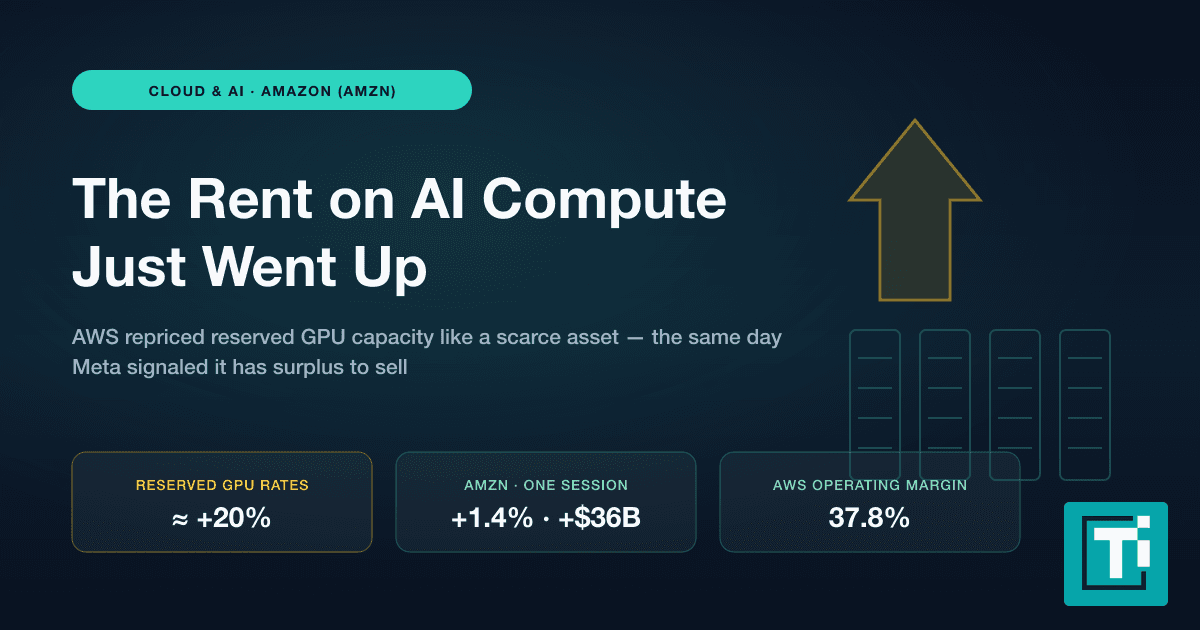
For Amazon, the comparison must stay narrower. Its scheduled October 29 earnings call will reveal whether operating cash and property-equipment purchases are moving toward each other as AWS capacity expands. TECHi's separate Amazon preview reconstructs that cash gap and distinguishes a strategic AI investment from capital expenditure. Repeating that accounting here would hide the different question: whether contracts and leases push required future payments ahead of demonstrable customer economics.
A scenario framework, not a price target
The constructive case for the group is that AI services and core products lift revenue or productivity faster than depreciation and cash commitments rise. Microsoft would show stronger Azure demand and durable margins; Alphabet would show Google Cloud growth that survives higher infrastructure costs; Amazon would show AWS growth and improving cash conversion. In that case, near-term negative free cash flow at one company need not imply a failed industry investment cycle. Meta's advertising strength is an example of an existing business that can help pay for new capacity while direct AI monetization develops.
The cautious case is subtler than a collapse in AI demand. Demand could remain strong while the cash return is delayed by high construction costs, slower customer deployment, power constraints or pricing pressure. If updated filings show faster growth in payments due in the next 12 to 24 months than in cash generation, the market may demand a lower valuation even when reported revenue grows. This is a forecast of the condition that would pressure valuations, not a prediction that any stock must fall or that a particular dollar of commitments will turn into an immediate expense.
A tougher downside case would require evidence of underused capacity, materially weaker cloud or advertising economics, rising financing costs and little improvement in cash after investment. Conversely, better utilization, a stable payment calendar and sustained margin growth would undermine the worry. Neither outcome can be inferred from one quarterly free-cash-flow figure. The useful discipline is to revisit the same cash measures and commitment maturity buckets after each filing rather than move the goalposts to whichever metric looks strongest that week.
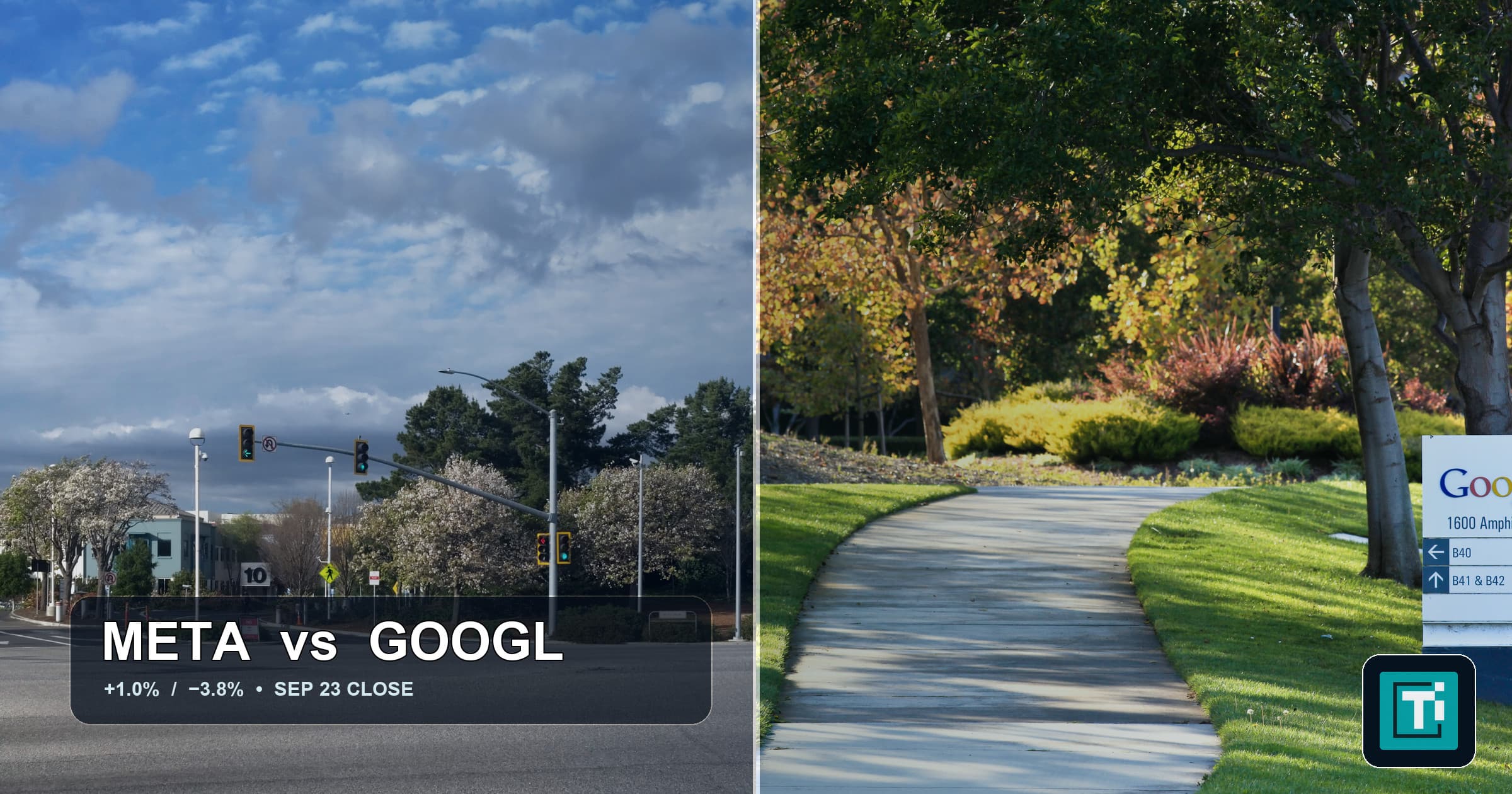
As a dated stock reference, TECHi's META quote page showed a $642.62 regular-session close on Friday, October 23, 2026, at 4:00 p.m. EDT, down 0.96% from the previous close; prices may be delayed. This is the last confirmed session before the Monday October 26 article, not a live Monday quote. The share price alone gives no dependable payback rate for Meta's future infrastructure obligations. A valuation argument would also require a consistent earnings or cash-flow denominator and a view of financing, dilution and project returns.
What to watch
Microsoft plans to release fiscal first-quarter results after the U.S. close on Wednesday, October 28. Amazon lists its third-quarter call for Thursday, October 29. Alphabet also plans to report on October 28, according to its company announcement; its next filing will matter most for a like-for-like commitment comparison. After each release, compare operating cash, property purchases, finance-lease payments and the timing of future commitments, then ask whether the revenue attached to the added capacity is becoming visible. The payback test remains open until those figures arrive.

Disclaimer
This article is for informational purposes only and does not constitute financial, investment, tax, or legal advice. Market data, tax rules, and prices can change after the article date. TECHi and its authors may hold positions in securities or digital assets mentioned. Always conduct your own research and consult a licensed financial, tax, or legal professional before making decisions.





Comments