

Editorial illustration of Elon Musk, Cathie Wood and the Tesla emblem. Illustration: TECHi.
Cathie Wood’s ARK Invest has put a $4,400 price on Tesla shares in 2031, with robotaxis accounting for roughly 80% of the company’s projected enterprise value. The October 19 forecast turns the investment question toward whether Elon Musk can build an autonomous transport business large enough to transform Tesla’s earnings.
The target is nearly 12 times Tesla’s $368.06 regular-session close on October 19, recorded at 4 p.m. EDT on TECHi’s Tesla quote page. That implies approximately 1,095% upside, calculated by dividing $4,400 by $368.06 and subtracting one. It is a comparison with a dated closing price, not an available return or a prediction from TECHi.
The big number comes with a bigger assumption
ARK’s example base case envisages 8.1 million robotaxis and $753 billion in annual ride-hailing net revenue in 2031. It puts Tesla’s total revenue at $1.449 trillion and market capitalization at $17.5 trillion. Those are modeled outcomes, not company guidance or contracted sales.
The central investment challenge is therefore concentration. A business can have several promising products while its valuation still depends overwhelmingly on one commercial breakthrough. Car sales, batteries and software could all improve, yet shareholders could be disappointed if autonomous transport develops more slowly than the valuation requires.
Enterprise value and market capitalization also measure different things. Market capitalization values the equity held by shareholders. Enterprise value generally adjusts that amount for debt and cash, among other claims. A business segment’s share of enterprise value therefore cannot simply be multiplied by a stock target to produce a reliable standalone price for that segment.
That distinction cuts both ways. Judging Tesla only by the economics of selling another passenger vehicle would miss the potential value of repeatedly selling rides. But counting future rides as though the network already operated at scale would skip the hardest part of the investment case: turning technical capability into durable, profitable demand.
A bear case is not a safety net
ARK places its lower and upper scenarios at approximately $3,300 and $5,000, representing the 25th and 75th percentiles of its simulation. They are not minimum and maximum possible prices.
Its public model repository describes 5,000 simulation runs, with assumptions feeding through vehicle pricing, ride-hailing adoption and business valuation. Such a model can show how selected assumptions interact. It cannot establish that the selected assumptions adequately capture every real-world risk.
For readers, the label “bear” needs particular care. A relatively weak outcome within an optimistic framework can still produce an enormous gain. That does not mean an investor faces limited downside outside the framework. Slower deployment, weaker pricing or a lower valuation multiple could change the investment outcome substantially.
There is also a difference between precision and confidence. A spreadsheet can calculate a share price to several decimal places even when a critical commercial input remains uncertain. The useful questions concern which assumptions do the most work, what operating evidence supports them, and how the conclusion changes when those assumptions deteriorate together.
Consider a hypothetical company earning $100 per share. A market willing to pay 30 times those earnings would value each share at $3,000; at 20 times earnings, the price would be $2,000. That is a one-third decline without any reduction in earnings. These illustrative inputs are not Tesla estimates. They show why achieving an operating forecast would still leave shareholders exposed to valuation risk. Strong growth and a disappointing stock return can coexist if the starting expectations or eventual multiple prove too generous.
The target has also moved further into the future
ARK’s previous published model, released in June 2024, gave Tesla an expected value of $2,600 per share in 2029. The new headline number is higher, but it also refers to a later year. Treating the difference as a straightforward upgrade to the same forecast would obscure that change in horizon.
Time matters because additional years allow a model to accumulate more vehicles, more customers and more earnings. They also introduce more uncertainty. Competitive conditions, financing costs and the price investors will pay for distant profits can all change before the forecast year arrives.
A simple illustration shows the scale involved. A share price that compounded at 20% annually for five years would rise about 2.49 times. At 40%, it would rise about 5.38 times. These are hypothetical growth examples, calculated as one plus the annual rate raised to the fifth power; neither is a Tesla forecast.
Compounding can produce striking results, but it cannot supply the business performance that makes those results possible. A long horizon should make investors more attentive to milestones along the way, rather than less demanding about evidence today.
Driver assistance and driverless revenue are different businesses
Tesla’s current consumer documentation says Full Self-Driving (Supervised) requires an attentive driver and does not make a vehicle autonomous. It lists a U.S. subscription price of $99 a month, with availability depending on factors including hardware, software and region.
Those disclosures are relevant because paying for supervised driving software is economically different from paying a driverless fleet for transportation. One is a subscription attached to a customer’s vehicle. The other requires a service that can repeatedly complete paid trips while managing vehicles, passengers and operating costs.
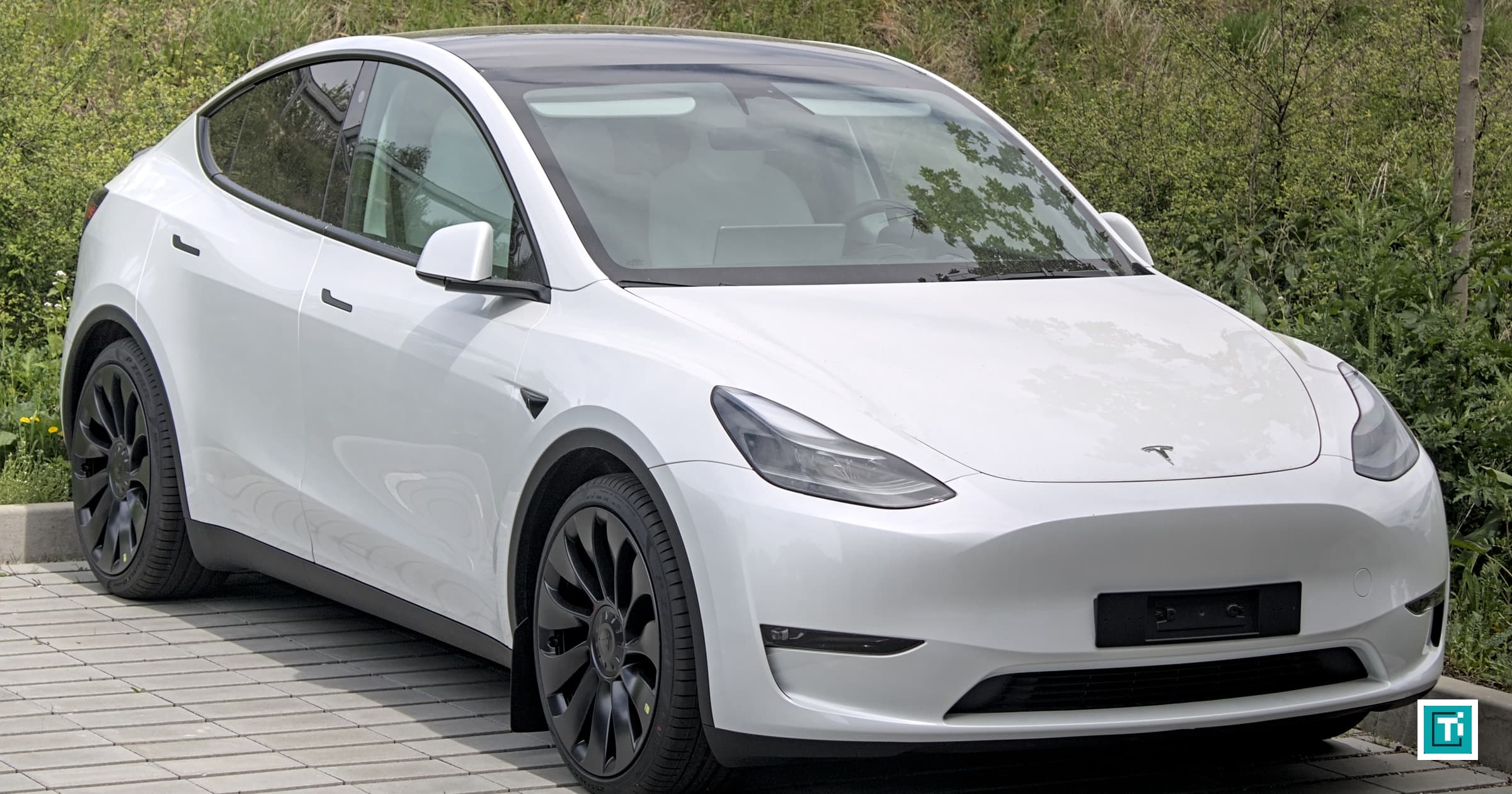
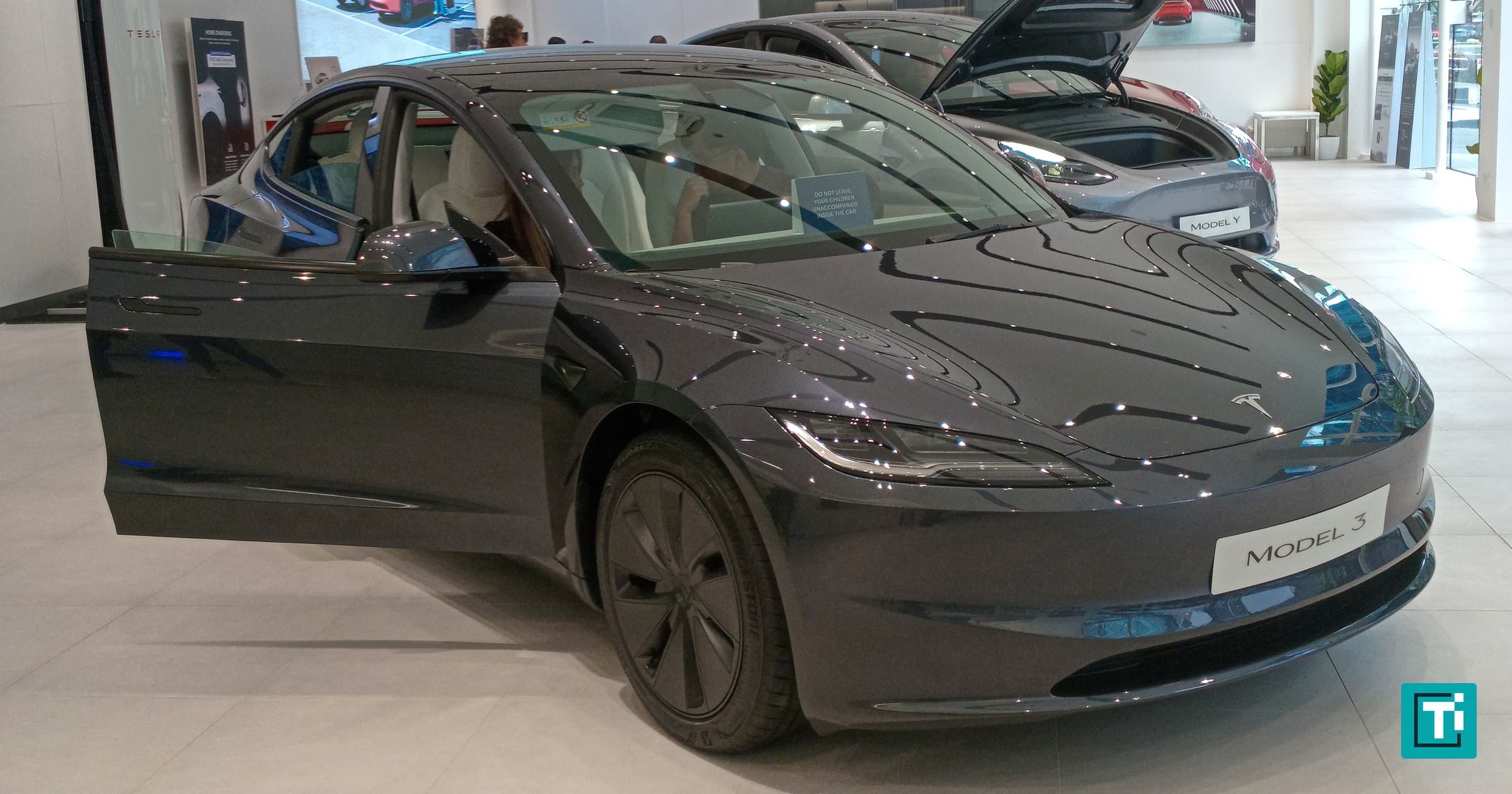
Tesla already operates Robotaxi. Its service documentation lists availability in limited areas of Austin, Dallas, Houston, Miami, Orlando and Tampa, using Model Y and Cybercab vehicles. The investment question has moved beyond whether a service exists to whether its commercial footprint can expand with the economics required by the valuation.
A transport network has a different set of questions. How much revenue does each paid trip generate? What portion remains after charging, maintenance, insurance, cleaning and support? How much time do vehicles spend carrying customers rather than waiting or repositioning?
High passenger demand alone would not answer those questions. Lower fares could attract riders while reducing revenue per trip. More vehicles could improve availability while raising the capital committed to the service. The strongest evidence would connect customer usage with sustainable economics, using transparent and consistent definitions across comparable reporting periods.
Tesla’s next report provides a nearer checkpoint
Tesla has scheduled its third-quarter results for October 21 after the U.S. market closes, followed by a webcast at 5:30 p.m. Eastern. The company has already reported 486,532 vehicle deliveries and 13.7 gigawatt-hours of storage deployments for the quarter.
Those figures describe current operating activity. They do not settle how much profit or cash the activity produced. Tesla itself cautions that deliveries and storage deployments should not be treated as a substitute for quarterly financial results.
The company-compiled analyst consensus, dated October 19, estimates third-quarter revenue of $28.341 billion, a 2.5% operating margin and negative free cash flow of $4.506 billion. These are external analysts’ estimates collected by Tesla, not reported results or Tesla’s endorsement of the forecasts.
The practical question for the next earnings release is how the current business finances expansion. Spending can create valuable capacity, but its usefulness depends on the returns that capacity eventually earns. Investors need to distinguish a temporary construction bill from recurring costs that persist as a new service grows.
TECHi’s separate Tesla earnings preview examines that immediate cash-flow test. For the longer forecast, the relevant connection is whether financial resources, investment demands and commercial progress remain compatible as the business expands.
What would strengthen the case—and what would weaken it
The strongest argument for a much larger valuation is that a successful autonomous service could earn revenue repeatedly from the same manufactured asset. If software improves without a proportional increase in operating expense, growth could become more profitable as the network expands. That is a plausible business mechanism, although its magnitude still needs evidence.
The strongest counterargument is that transport remains a physical service. Cars wear out, require servicing and occupy streets. Customer support and liability do not disappear when a driver does. A valuation that assumes attractive software economics must still account for those physical obligations.
A useful progress report would separate paid activity from testing, customer receipts from temporary discounts and promotional incentives, and fleet expansion from actual utilization. Consistent disclosures would allow investors to judge whether scale improves economics or merely increases spending. Without them, adding cities or vehicles provides an incomplete picture.
Financing deserves similar scrutiny. Enterprise growth and shareholder returns can diverge when investment requires additional equity. Revenue can rise strongly while the ownership claim attached to each existing share grows more slowly. Future per-share outcomes therefore depend on both business performance and the capital structure used to support it.
ARK also discusses a possible Tesla–SpaceX combination, but excludes it from this standalone valuation. Its report acknowledges speculative forecasts and positive bias. A merger scenario should therefore remain separate from the operating evidence needed to support the Tesla target.
Wood’s forecast gives investors a demanding benchmark. The decisive updates will concern measurable, consistent and repeatable commercial performance: customers paying, vehicles working, costs becoming clearer and investment producing returns. Until those measures support the required scale, $4,400 remains a conditional valuation of a business whose projected scale Tesla still has to prove.

Disclaimer
This article is for informational purposes only and does not constitute financial, investment, tax, or legal advice. Market data, tax rules, and prices can change after the article date. TECHi and its authors may hold positions in securities or digital assets mentioned. Always conduct your own research and consult a licensed financial, tax, or legal professional before making decisions.
About the Author
Omer SheikhOmer Sheikh is a markets editor at TECHi. His published work covers public companies, with particular attention to AI infrastructure, semiconductors, Tesla and SpaceX. His portfolio includes company results, stock comparisons and conditional forecasts, examining demand, capital spending and the business assumptions behind market valuations.


Comments