



Updated, July 3, 2026: The billionaire rotation out of SanDisk described below did not last. First-quarter 2026 13F filings, disclosed in mid-May, show Stanley Druckenmiller's Duquesne Family Office — which had sold out of SanDisk entirely in late 2025 — re-established a 38,155-share position and opened new stakes in Micron (23,400 shares) and Seagate (50,700 shares). SanDisk went on to finish the first half of 2026 as the S&P 500's best-performing stock. The original reporting below is unchanged.
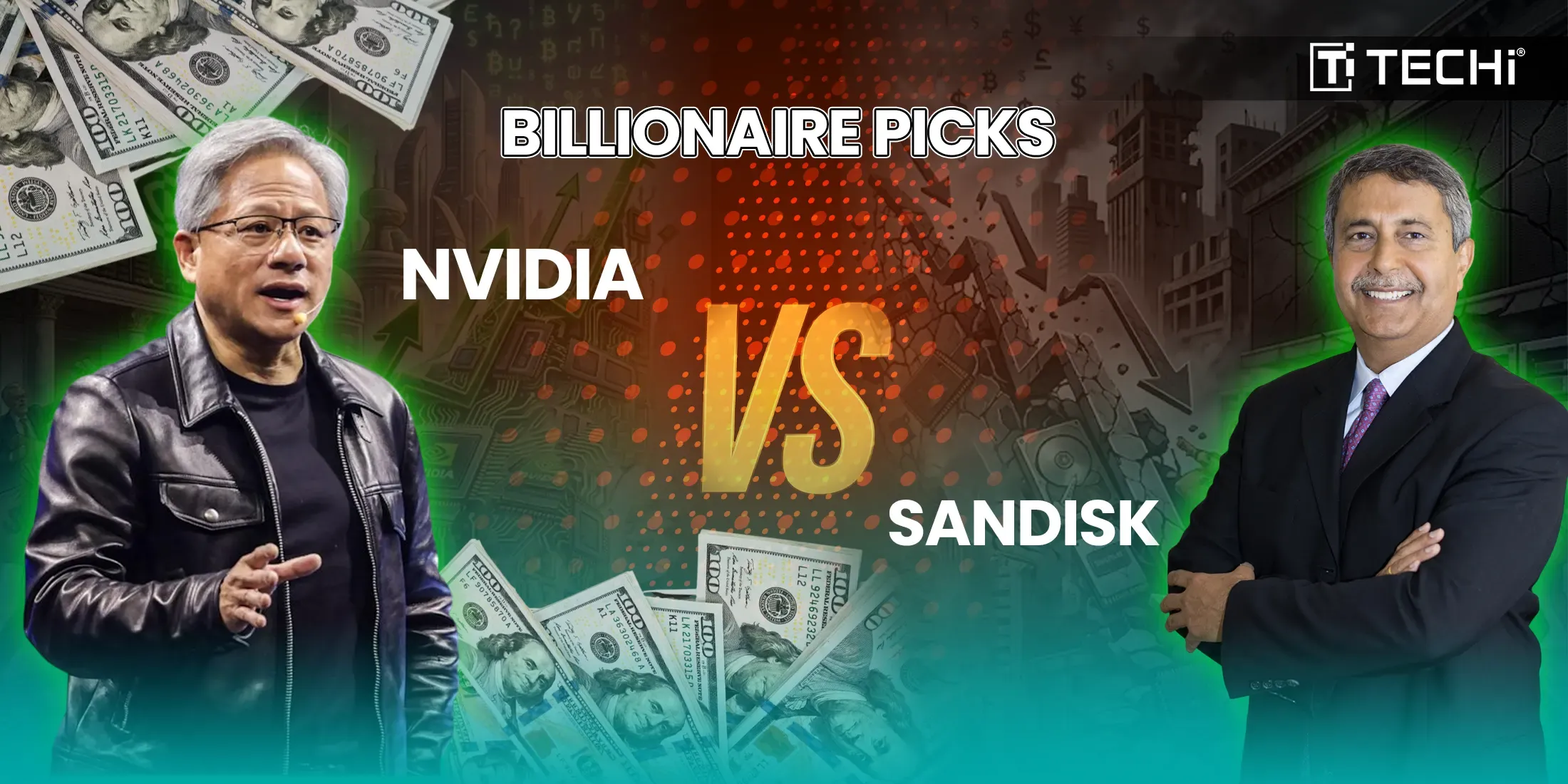
Two billionaire hedge fund titans just made a bold bet on AI's future. In Q4 2025, Cliff Asness of AQR Capital Management and Steven Schonfeld of Schonfeld Strategic Advisors snapped up Nvidia shares while unloading SanDisk, signaling confidence in chips powering the AI boom over volatile memory plays.
Hedge Fund Moves
Asness boosted his Nvidia stake by 18% with 3.9 million shares, making it his top holding worth billions. He slashed SanDisk by 22%, dropping 318,600 shares; it's no longer in his top 50. Schonfeld tripled Nvidia exposure by adding 2 million shares, now his third-largest position, while cutting SanDisk 27%.
These managers have crushed the S&P 500 over three years, turning their portfolios into must-watch signals.
Market Leaders Clash
Nvidia dominates data center GPUs and networking, grabbing over 50% of AI infrastructure costs per Bernstein and TD Cowen estimates far outpacing storage at just 1%. SanDisk, fifth in NAND flash behind Samsung and Micron, rides a supply crunch but lacks Nvidia's edge.
Moats and Margins
NVIDIA generated $68.13 billion in Q4 revenue, up 73.2% from the previous year. Revenue exceeded projections by almost $2 billion, demonstrating its performance trench and software ecosystem. SanDisk's 51% margin mirrors Micron's 57%, vulnerable to commoditized cycles.
Valuation Edge
For a company whose adjusted earnings rose by 82% in the most recent quarter, Nvidia's current valuation of 38 times adjusted earnings is comparatively low. Furthermore, compared to the two-year average of 53 times earnings, the current P/E multiple represents a significant discount.
NVIDIA is less risky than Sandisk due to its lower valuation. Expect Nvidia to power ahead; SanDisk may cool sharply by late 2026.
Disclaimer
This article is for informational purposes only and does not constitute financial, investment, tax, or legal advice. Market data, tax rules, and prices can change after the article date. TECHi and its authors may hold positions in securities or digital assets mentioned. Always conduct your own research and consult a licensed financial, tax, or legal professional before making decisions.
About the Author

Warisha Rashid covers AI stocks and crypto markets for TECHi. Recent work explains what changed when Worldcoin cut its WLD token unlock, how AMD's rack-scale Helios design fits an asset-light strategy, and how Nvidia, Alphabet, Palantir, AMD and Broadcom compare as AI businesses.

Comments