

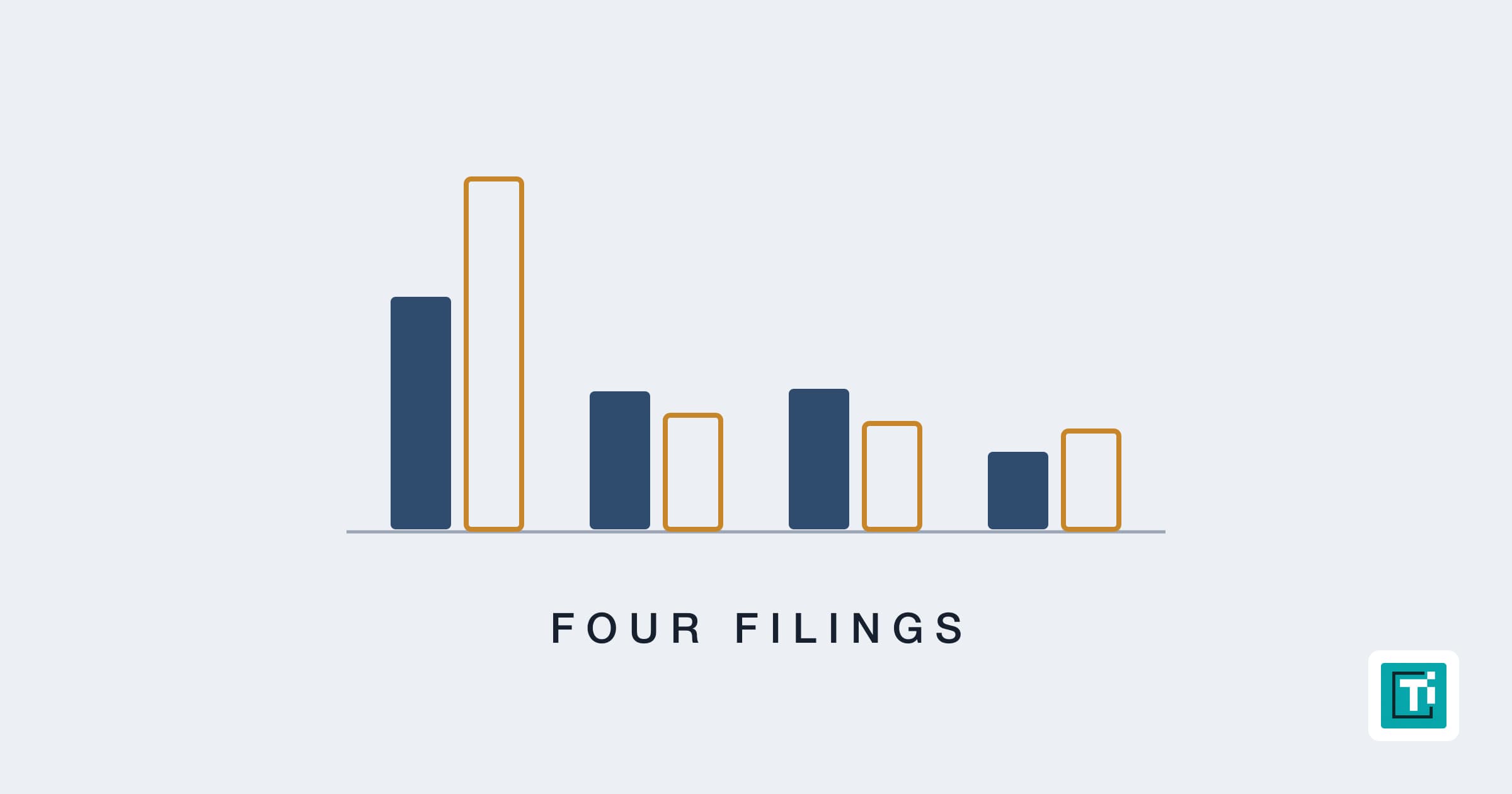
Editorial illustration. The bar is the 3,444,160 AI chips that exporters applied to sell to Chinese buyers, drawn to scale by outcome on May 11, 2026: approved (red), returned without action (outlined), under review (pale blue) and rejected (dark). Illustration: TECHi, from House Foreign Affairs Committee records.
The US Commerce Department had approved the export of 879,868 advanced AI chips from Nvidia and AMD to Chinese companies by May 11, 2026, according to license records the House Foreign Affairs Committee made public on Thursday, November 19. Exporters had applied to sell 3,444,160. None of the approved chips had shipped by the date of the records.
TECHi added up all 54 applications in the released table. A quarter of what was requested was approved. More than half, 1.89 million chips, was sent back without a decision, and 1.12 million of those were meant for sites in Malaysia, Indonesia and Thailand. That is more than Washington approved for China itself, and those three countries are among the five that a new US chip rule covers from this week.
Key Takeaways
- The approvalsUS officials had approved 879,868 Nvidia and AMD AI chips for Chinese companies by May 11, 2026, out of 3,444,160 requested.
- The refusalsApplications for 1.89 million chips were returned without action, including Nvidia’s request to sell 610,000 to Alibaba.
- Southeast AsiaFive returned applications sought 1.12 million chips for sites in Malaysia, Indonesia and Thailand, more than was approved for China.
- The ceilingNo approval exceeds 75,000 chips. Nine of the 21 are for exactly that number, and every AMD application asked for it.
- The caveatEvery approval was marked not shipped on the date of the records. Approval is not delivery, and Nvidia has since halted H200 sales to China.
What did the committee release?
Two documents. One is a two-page summary written by the committee. The other is a table from the Bureau of Industry and Security, the Commerce Department agency that issues export licenses, headed with the status of applications as of May 11, 2026. It lists each application by date, exporter, buyer and number of chips.
The chips covered are Nvidia's H200 and AMD's MI325X. The buyers are companies based in China or owned by a parent there, which is why applications for data centers in Southeast Asia appear on the list.
The committee's Republican chairman, Brian Mast, released the records under a provision of the Export Control Reform Act that lets the committee publish license information when it decides secrecy is against the national interest. The disclosure was approved by unanimous consent, the committee's senior Democrat, Gregory Meeks, said in a statement. The committee called it the most detailed disclosure of its kind under the act.
What do the numbers show?
The table sorts the applications into four groups.
Twenty-one were approved, for 879,868 chips, which is 25.5% of everything requested. Nine were marked RWA, the agency's abbreviation for returned without action, for 1,888,950 chips, or 54.8%. Twenty-three were still under review, for 600,342 chips. One was rejected: AMD's request to sell 75,000 chips to the cloud company UCloud.
Set aside the applications still pending and 30.9% of the chips with an outcome were approved.
The largest requests did not get through. Nvidia asked in February to sell 610,000 chips to Alibaba, and in December to supply 508,000 to a ByteDance unit in Malaysia. Both were returned.
A ceiling is visible in the approvals. None is for more than 75,000 chips, and nine of the 21 are for exactly that number. TECHi reported in August that the licenses allow up to 75,000 chips for each approved customer.
| Status on May 11, 2026 | Applications | Chips | Share of chips requested |
|---|---|---|---|
| Approved, not shipped | 21 | 879,868 | 25.5% |
| Returned without action | 9 | 1,888,950 | 54.8% |
| Under review | 23 | 600,342 | 17.4% |
| Rejected | 1 | 75,000 | 2.2% |
| Total | 54 | 3,444,160 | 100% |
Who was approved?
ByteDance and Tencent received the most. Each had one Nvidia application and one AMD application approved at 75,000 chips, for 150,000 apiece. Didi was approved for 99,780 across the two suppliers. Alibaba, Kuaishou, VNET and Linkwise Digital were each approved for 75,000. The game developer miHoYo was approved for 57,810, Baidu for 43,000 and JD.com for 41,300.
Carmakers are on the list in smaller numbers. Li Auto was approved for 8,260 chips, Great Wall Motor for 4,800, and BYD and Tesla's Shanghai unit for 4,000 each.
The committee's summary says four of the approved buyers are on the Pentagon's list of Chinese military companies: Alibaba, Tencent, Baidu and BYD. Their approvals total 272,000 chips, or 30.9% of the total. That list restricts Pentagon contracting. It is not an export blacklist.
The two suppliers fared differently. Nvidia had 17 applications approved for 579,868 chips, 65.9% of the approved total. AMD had four approved for 300,000. Every one of AMD's eight applications was for exactly 75,000 chips, and half of what it asked for was approved. For Nvidia the share was 20.6%, because its largest requests were the ones sent back.
Why does Southeast Asia matter?
Five of the returned applications were not for China at all. Nvidia applied in December 2025 to supply 1,118,500 chips to units of ByteDance, TikTok and Alibaba Cloud in Malaysia, Indonesia and Thailand. That is 32.5% of everything requested, and 1.3 times what was approved for China.
None of it was approved. All five applications were returned without action.
Those are three of the five countries named in the Commerce rule that took effect on Thursday, which requires a license to send advanced AI chips there and covers data centers that serve Chinese companies. The records show the scale of the demand the rule is aimed at. They also show that the largest requests of that kind were already being turned back in the months before it was written.
Did the chips reach China?
Not by May. Every one of the 21 approvals carries the same note in the table: approved, not shipped.
Deliveries began later and stayed small. ByteDance and Tencent had each received about 10,000 H200 chips by August, the Financial Times reported, 13% of what one license allows. Nvidia's results show $2.4 billion of shipments of that generation of chip to China in the three months to October 25. The company has since stopped selling the H200 to China, its interim chief executive told analysts on Tuesday, according to accounts of the call.
So 879,868 is what was permitted. It is not what arrived, and the released documents do not say how many chips were delivered.
What are lawmakers alleging?
The committee's release says the applications include requests by Nvidia to rely on what it calls possible chip-smuggling fronts. Its summary says all but two of Nvidia's applications name four companies that might install the systems: Maginfra, Beijing New Matrix Information Technologies, ZTE Kangxun Telecom and Lenovo. It cites New York Times reports that raised questions about the risk of chips being diverted through two of those companies and a third. Mast said at Thursday's meeting that he believes two of them are fronts, Quartz reported, citing CNBC.
These are allegations by lawmakers. The documents make no finding against any company, and TECHi has not seen responses from the companies named. The summary also notes that every application described the risk of diversion as low. The Commerce Department did not immediately respond to CNBC's request for comment, according to Quartz.
Meeks said the record shows the agency approving licenses with little scrutiny while other reviews were delayed. He called for public hearings with Commerce Secretary Howard Lutnick and the head of the bureau, Jeffrey Kessler.
What does it mean for Nvidia and AMD stock?
Both fell on Thursday, in a market that fell with them. Nvidia closed down 3.3% at $145.98 and AMD down 7.7% at $489.19, while the Nasdaq Composite lost 2.25%. At 5:52 a.m. Eastern on Friday, before the market opened, Nvidia was at $142.97 and AMD at $465.95.
For Nvidia the sales at stake are already out of its forecast. Those China shipments were 2.1% of revenue last quarter, and the outlook it gave on Tuesday assumes none. The records matter more as evidence in the argument over how export controls were run, which now includes hearings and proposals for new legislation.
For AMD the records give a detailed count of its licensed China business. They show approval to sell 300,000 MI325X chips. They do not show how many it sold.
What to watch
The 23 applications still pending, covering 600,342 chips, and whether any are decided now that Nvidia has stopped H200 sales. Hearings, if Lutnick and Kessler are called. Jensen Huang is due to give a transcribed interview to three House committees on December 1, and Nvidia's general counsel on December 2, the committee has said. Data centers already serving Chinese companies have until February 17, 2027 to obtain licenses under the new rule. TECHi's quote pages for Nvidia and AMD carry live prices.

Disclaimer
This article is for informational purposes only and does not constitute financial, investment, tax, or legal advice. Market data, tax rules, and prices can change after the article date. TECHi and its authors may hold positions in securities or digital assets mentioned. Always conduct your own research and consult a licensed financial, tax, or legal professional before making decisions.




Comments