
- The debutSK Hynix ADRs begin trading Friday, July 10 on the Nasdaq under ticker SKHY — 177.9 million ADRs, 10 per common share, the largest first-time US share sale by a foreign company.
- The demandThe book ran more than 7x oversubscribed, with Baillie Gifford, Coatue and Situational Awareness Partners signaling up to $7 billion combined.
- The timingMicron, Samsung and SK Hynix each fell 20%+ between June 25 and July 3 — memory's first bear market of the AI cycle.
- The stakesSK Hynix trades near 6.2x forward earnings versus Micron's 7x. Friday tests whether that gap was access friction or cycle risk.
- The Micron readFrom Friday, Micron is no longer the only US-listed HBM pure play. The SKHY–MU pair becomes the sentiment gauge for the whole memory trade.
Wall Street's order book and Wall Street's tape have spent two weeks telling opposite stories about memory chips. On Friday, July 10, one of them gets proven wrong in public.
SK Hynix — the Korean company that supplies most of the high-bandwidth memory inside Nvidia's AI accelerators — priced the largest first-time US share sale ever attempted by a foreign company on Thursday evening, July 9. Its American depositary receipts begin trading on the Nasdaq Global Select Market on Friday morning under the ticker SKHY. Demand ran more than seven times the shares available, according to Bloomberg reporting, with Baillie Gifford Overseas, Coatue Management and Situational Awareness Partners signaling appetite for up to $7 billion of the deal between them. SK Hynix's Seoul-listed shares rose 5.3% on Thursday, to 2.186 million won, as the book closed.
That demand materialized during the ugliest stretch memory stocks have seen since the AI cycle began. Institutions filled a record order book with the charts bleeding red. Either the buyers just caught a falling sector, or they know something the sellers of the past two weeks don't.
The sale shrank while the demand grew
SK Hynix launched the offering on Monday, July 6: 177.9 million ADRs, each representing one-tenth of a common share — 17.79 million newly issued shares in total. The stated target was $28.21 billion, already trimmed from roughly $29.65 billion in the original filing because the underlying stock kept sliding while bankers marketed the deal. At Thursday's closing price in Seoul, the sale computes to about $25.7 billion. Any of those numbers sets the record: Fortune reported the deal is on track to become the largest-ever first-time share sale by a foreign company on US markets, a distinction Alibaba has held since 2014.
The structure matters as much as the size. Every ADR represents a newly issued share — this is the company raising capital, not insiders finding an exit. Proceeds are earmarked for fab expansion in South Korea and equipment purchases, including ASML's extreme ultraviolet lithography scanners. BofA Securities, Citigroup, Goldman Sachs and J.P. Morgan are running the deal alongside nine other banks.
The product being listed is the Korea discount
SK Hynix and Micron both crossed $1 trillion in market value over the past year, each riding gains of roughly 700%. Yet SK Hynix trades near 6.2 times expected earnings against Micron's 7, per Fortune's figures — a discount that survived record results largely because the shares lived on an exchange most US portfolios never touch. The existing over-the-counter ADRs are thinly traded. Seoul access means currency plumbing, settlement friction and index exclusions that most American funds simply decline to deal with.
The fundamentals were never the problem. TECHi has tracked how SK Hynix spent 2026 racing to feed AI memory demand and how HBM4 pricing power lifted the Korean memory names well before this listing was filed.
That makes Friday a rare controlled experiment. Same fabs, same Nvidia qualification schedule, same balance sheet — only the investor base changes. If geography was the discount, it closes. If the discount was cycle fear wearing a Korean flag, it doesn't.
It prices into memory's first AI-era bear market
The timing borders on theatrical. Between June 25 and July 3, Micron, Samsung, SK Hynix and the Roundhill Memory ETF all fell more than 20% from recent highs. Micron alone surrendered about $350 billion in market value across seven sessions, part of a roughly $1.5 trillion drawdown in semiconductor stocks. Samsung reported a record $59 billion operating profit on $113 billion in sales — and sold off anyway. Yahoo Finance's Jared Blikre put it plainly: "The memory shortage may still be real. The market's patience is not."
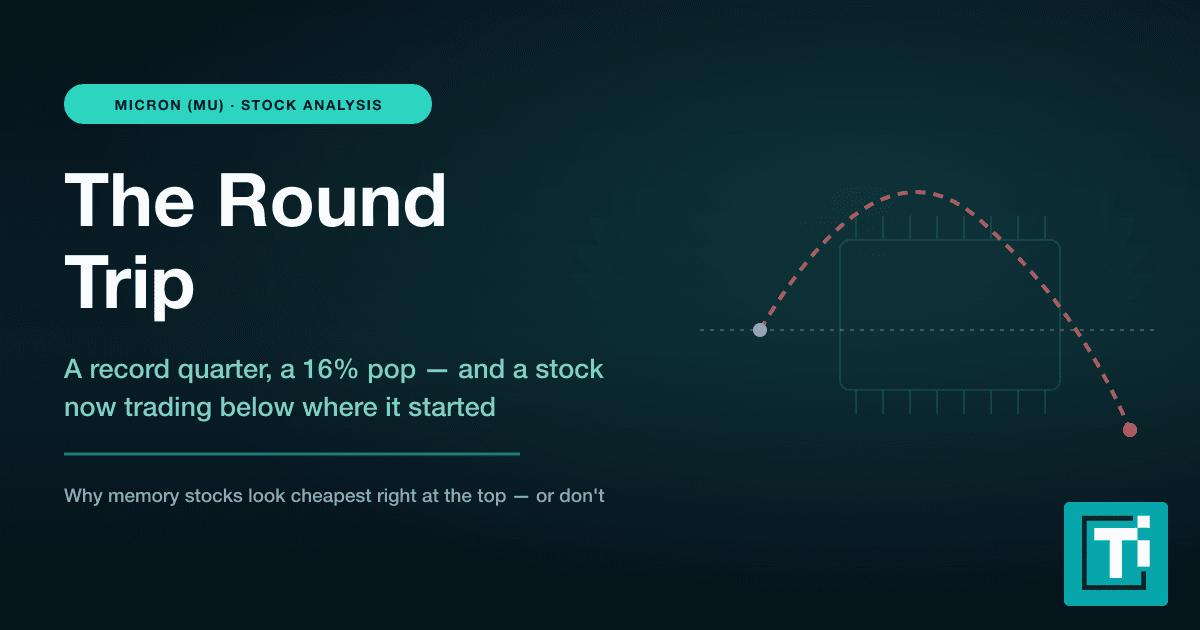
TECHi documented the whiplash in Micron's round trip through its $41 billion quarter on July 3. By Thursday, July 9, the tape had turned again: the Nasdaq rose 1.1% as investors looked past a US–Iran flare-up and focused on AI trades ahead of the SK Hynix debut.
So the sequence reads: memory enters a bear market, the deal gets trimmed by a billion and a half dollars, and the order book still fills seven times over. Both bulls and bears can claim that sequence as evidence.
The bell-ringing argument
Barchart's Rob Isbitts argued on Yahoo Finance in early July that giant listings tend to mark the moment a cycle's capital window closes — Alibaba's $21.8 billion New York debut in 2014 being the canonical example — and that SK Hynix arriving on the Nasdaq may be the memory trade ringing its own bell. His numbers explain both the seduction and the danger: SK Hynix holds roughly 56% of global HBM revenue and posted a 72% operating margin in the first quarter of 2026. Memory margins that fat have a long history of attracting exactly the capacity that kills them.
The tidy version of that argument skips one detail: nobody at SK Hynix is selling. The float is entirely new shares, and the proceeds buy scanners and cleanrooms rather than liquidity for executives. Memory veterans raise money when the raising is good for a reason — three years ago, both SK Hynix and Micron were posting losses. Raising $26 billion at six times earnings near a possible top beats raising a fraction of that at book value near a certain bottom.
What Friday decides for Micron
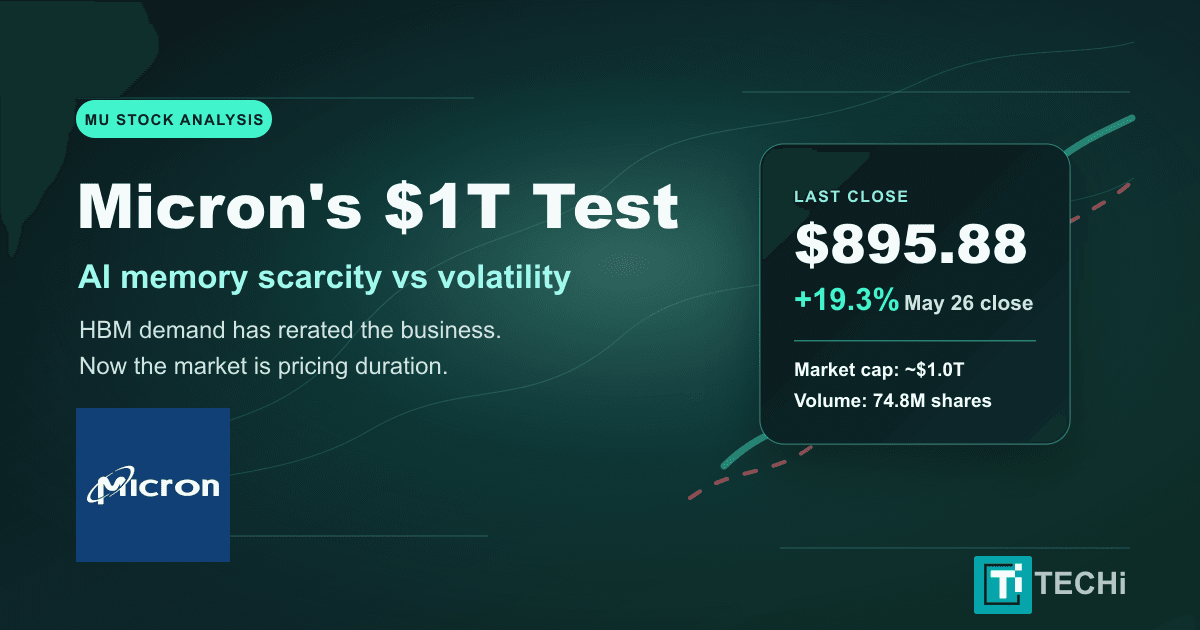
Micron closed July 8 at $948.80, a $1.10 trillion company priced at 22 times trailing earnings but about 6.4 times the consensus forward estimate, with an average analyst target near $1,486, per TECHi's Micron quote page. A multiple like that says the market expects memory earnings to keep compounding and simultaneously refuses to pay for the year after next.
Until this week, Micron was also the only trillion-dollar, US-listed pure play on the HBM shortage. From Friday there are two, and the pair trade becomes the cleanest sentiment gauge in semiconductors. If SKHY prices firmly and Micron holds its ground, new money is entering the memory trade. If SKHY pops while Micron bleeds, the same money is changing seats.
Four things that settle it at the open
- The final price against the 242,500-won-per-ADR reference set from Seoul's July 3 close — how much of the bear market did the bankers concede?
- The first trade versus the pricing. A modest premium suggests the book was real; a huge gap-up suggests allocations were rationed and the demand number flattered.
- Micron and the Roundhill Memory ETF's reaction — rotation out of the incumbent, or expansion of the whole trade.
- Follow-through next week. Institutions routinely pad orders in hot books expecting cuts. Sustained aftermarket buying, not the opening print, is what separates conviction from allocation games.
Eighteen months of AI-memory euphoria, one brutal two-week repricing, and a record order book now compress into a single number: what the US market will pay per dollar of SK Hynix earnings once there is no access friction left to blame. The Korea discount finally gets an American price. It arrives at 9:30 a.m. Eastern on Friday.
FAQ
Frequently asked questions
When does SK Hynix stock start trading in the US?
SK Hynix's ADRs are expected to begin trading on Friday, July 10, 2026 on the Nasdaq Global Select Market under the ticker SKHY, following final pricing on the evening of July 9.
How do SK Hynix's ADRs work?
Each American depositary receipt represents one-tenth of one Seoul-listed common share. The offering covers 177.9 million ADRs, equal to 17.79 million newly issued shares.
How much is SK Hynix raising in its Nasdaq listing?
The company targeted $28.21 billion at launch, down from about $29.65 billion in its original filing. At Thursday's closing price in Seoul the sale is worth roughly $25.7 billion; the final figure depends on pricing.
Is SK Hynix's US listing bad for Micron stock?
The listing changes nothing about Micron's business, but it ends Micron's run as the only US-listed pure-play memory stock. The question is whether money rotates from Micron into SKHY or new capital flows into both.

Disclaimer
This article is for informational purposes only and does not constitute financial, investment, tax, or legal advice. Market data, tax rules, and prices can change after the article date. TECHi and its authors may hold positions in securities or digital assets mentioned. Always conduct your own research and consult a licensed financial, tax, or legal professional before making decisions.
About the Author

Fatimah Misbah Hussain reports on the money behind AI and chips: Samsung raising foundry prices while losing share, Alphabet's first quarter of AI cash burn and the roughly $10 billion financing stack behind Korea's sovereign AI factory. US sanctions on crypto exchanges and X's new payouts for original posts are also part of her beat.

Comments