


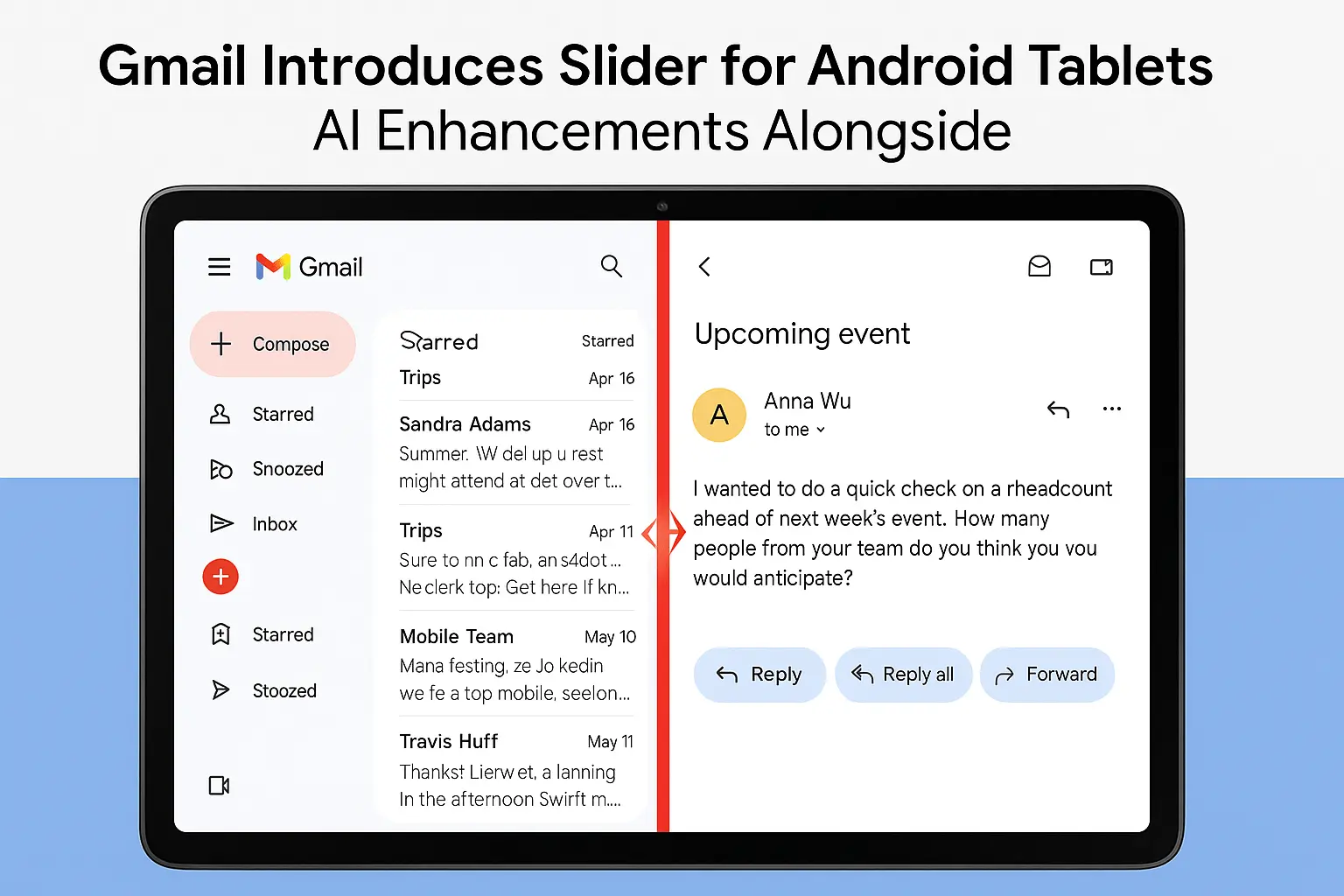
The separators between Gmail’s messages and conversation displays can now be adjusted by owners of Android tablets or foldable phones. The update was discovered by Google and was included in Gmail for Android version 2025.04.13.x. The Gmail app's two panes—the column on the right that displays distinct emails and discussions and the list on the left that displays many messages—can now be dynamically resized by dragging your finger across the divider. To see just one or the other, you can also drag the border to the edge of the screen.
The Google Chat app also has an adjustable divider for Android smartphones with huge screens. The new feature is available to anyone with a personal Google or Workspace Google account in either app. Additionally, Google is updating Gmail on IOS with Material Design 3, bringing it up to speed with the Android and redesign web versions. This upgrade includes a rounded search bar at the top and pill-shaped buttons at the bottom. Workspace and personal accounts are now receiving the update. Additionally, just like on Android, using Google Calendar on iOS now allows you to create and edit birthday events.
Lastly, Workspace users will be able to access Gemini's picture generator through the Gmail app panel on both iOS and Android. The Gmail app allows you to create photos, which you can then save, copy, or add straight to your email draft, just like Google's Workspace products on the web.
Disclaimer
This article is for informational purposes only and does not constitute financial, investment, tax, or legal advice. Market data, tax rules, and prices can change after the article date. TECHi and its authors may hold positions in securities or digital assets mentioned. Always conduct your own research and consult a licensed financial, tax, or legal professional before making decisions.
About the Author

Rabia Majeed covers indices, ETFs, and portfolio construction for TECHi readers building allocations rather than picking single names. Her coverage spans S&P 500 internals, sector-rotation signals, factor premiums (quality, momentum, low-vol), and the cost-basis details — expense ratios, tracking error, tax efficiency — that compound over long holds. She writes about the fund-structure decisions most retail coverage skips.





Comments