




The share price of Nvidia dropped by approximately 5 % in 2026, but the company still has an operating high capacity business, and so it is up to the investors to decide whether the present decline in the share price is an opportunity of buying it or a red flag.
Strong Earnings Powered by AI Demand
In the fourth quarter of fiscal 2026, Nvidia achieved the highest overall revenue in its history with a record of $68.1 billion, up 73% from a year ago and 20% from the prior quarter.
CEO Jensen Huang noted in the company's earnings release
"Computing demand is growing exponentially, the agentic AI inflection point has arrived,"
The sale of data-centers motivated by the need to buy AI GPUs increased by 75% to reach $62.3 billion. Net income rose for a second straight year, with diluted earnings per share up 98% to about $1.76.
Revenue increased to $215.9 billion in the entire fiscal year, 65% growth continues to indicate how central Nvidia is in AI infrastructure spend.
Valuation confronts the increasing competition
The valuation of Nvidia is still strong, with a price-to-earnings ratio of some 36.29 and a market capitalization valuation of $4.32 trillion as of March 7, 2026, with little discretionary space available to revise downwards.
At the same time, hyperscale clients like Amazon, Alphabet and Microsoft are hastening their investment in in-house chips e.g. Trainium and Tensor Processing Units to decrease reliance on Nvidia and to decrease the expenses of AI compute.
The actual benefit of the pullback
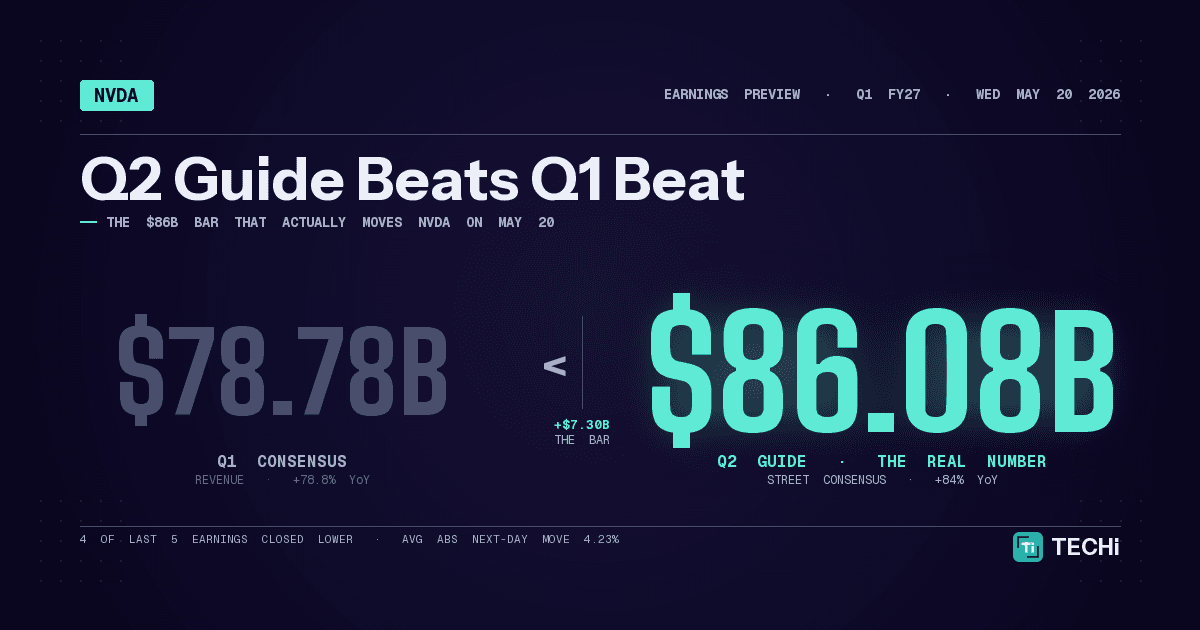
Nvidia projects first-quarter fiscal 2027 revenue of $78.0 billion, plus or minus 2%,, meaning that even following the previous year’s burst it will keep growing exponentially.
A lot of information about the company's most recent quarter (and entire year) of operations can be found in NVIDIA's most recent earnings report. NVIDIA spent $40 billion on share buybacks during that time, which is one of the more intriguing facts from the annual report.
However, the concentration in a small number of hyperscalers, and the risk of price pressure, and a high-priced valuation multiple all indicate a stock that is priced to have long-term dominance over the traditional growth story. To investors with volatility tolerance and still convinced of Nvidia's ability to protect its AI lead against the custom silicon.
Those with a more conservative outlook will have to wait for a final assessment of the dominance's resilience, but the current decline can be viewed as an opportunity to establish a modest, measured holding.
Disclaimer
This article is for informational purposes only and does not constitute financial, investment, tax, or legal advice. Market data, tax rules, and prices can change after the article date. TECHi and its authors may hold positions in securities or digital assets mentioned. Always conduct your own research and consult a licensed financial, tax, or legal professional before making decisions.
About the Author

Warisha Rashid covers AI stocks and crypto markets for TECHi. Recent work explains what changed when Worldcoin cut its WLD token unlock, how AMD's rack-scale Helios design fits an asset-light strategy, and how Nvidia, Alphabet, Palantir, AMD and Broadcom compare as AI businesses.
Comments