
Elon Musk is no longer chasing a milestone — he cleared it. On June 12, 2026, the day SpaceX began trading on the Nasdaq under the ticker SPCX, Musk became the first person in recorded history to be worth more than $1 trillion. By June 18, the Bloomberg Billionaires Index put his fortune at roughly $1.23 trillion; Forbes had him near $1.2 trillion. Two months earlier he was worth about $800 billion and merely "on track" for the milestone — the SpaceX listing turned a projection into a fact in a single trading session.
The thing that flipped the switch was not Tesla. It was SpaceX. Its IPO priced at $135 a share for an implied valuation near $1.77 trillion, raised about $75 billion, and instantly became the largest public offering ever — more than two and a half times the size of Saudi Aramco’s 2019 listing. Musk’s stake in the newly public company is worth more than $760 billion on its own, which is why his net worth jumped past a line no individual had ever reached.
Here is the honest 2026 picture: Musk is a trillionaire on paper, the bulk of that wealth is freshly public SpaceX stock he mostly cannot sell yet, and the gap between his "paper" fortune and his spendable cash is now the most important number nobody quotes. Below is how the $1.2-trillion-plus breaks down, what drove it, and why the figure is both more concrete than it was three months ago and still more fragile than it looks.
- World’s first trillionaireMusk crossed $1 trillion on June 12, 2026, the day SpaceX listed on the Nasdaq as SPCX. Bloomberg pegged him near $1.23 trillion by June 18; Forbes around $1.2 trillion.
- SpaceX did it, not TeslaThe SpaceX IPO priced at $135/share for a ~$1.77 trillion valuation and raised ~$75 billion — the largest offering in history. Musk’s stake alone is worth more than $760 billion.
- Tesla recoveredTSLA closed at $400.49 on June 18, up from its ~$353 April low, putting Musk’s Tesla exposure (equity plus his restored 2018 options) near $283 billion.
- Composition shifted hardSpaceX is now ~70% of Musk’s fortune. With xAI folded into SpaceX in the February 2026 merger, a single company drives the trillion-dollar headline.
- Paper, not cashMost of the trillion is illiquid: newly public SPCX shares face IPO lock-ups of 90–180 days, and a Tesla or SpaceX pullback could erase hundreds of billions on paper as fast as the IPO added them.
The Wealth Breakdown: Where the $1.2 Trillion Comes From
Musk’s net worth is concentrated in three assets: his stake in the newly public SpaceX (which now contains xAI), his Tesla shares, and his 2018 Tesla option package. Everything else — X, Neuralink, The Boring Company, real estate — is a rounding error at this scale.
The estimates below use SpaceX’s $135 offering price, which values Musk’s stake at roughly $766 billion and his total fortune near $1.07 trillion. Bloomberg’s higher $1.23 trillion mark reflects SPCX trading up after it listed; the spread between the two is the clearest illustration of how much these figures move with a single, freshly public stock.
Musk’s Asset Portfolio
Asset | Ownership Stake | Estimated Valuation | Musk’s Share | % of Net Worth |
|---|---|---|---|---|
SpaceX (Nasdaq: SPCX, incl. xAI) | ~42% | ~$1.77 Trillion (IPO) | ~$766B | ~70% |
Tesla equity (TSLA) | ~13% | ~$400 / share | ~$168B | ~16% |
Tesla 2018 options | 304M @ $23.33 strike | ~$115B intrinsic | ~$115B | ~11% |
X (formerly Twitter) | ~79% | ~$12.5B (est.) | ~$10B | ~1% |
Neuralink | Majority | ~$10B | ~$5B | <1% |
The Boring Company | Majority | ~$7B | ~$5B | <1% |
The composition has tilted even further toward SpaceX. A year ago Tesla was roughly 60% of Musk’s wealth and SpaceX was the private wildcard. Today SpaceX is about 70% of the total — and, crucially, it is no longer private. Its value is now set every trading day by the public market, which cuts both ways: the IPO crystallized a real, mark-to-market number, but it also means Musk’s dominant asset can now fall on a bad day like any other stock.
SpaceX’s $1.77 Trillion IPO: The Listing That Made Him a Trillionaire
SpaceX priced its initial public offering at $135 per share and started trading on the Nasdaq as SPCX on June 12, 2026. The raise of roughly $75 billion was the largest in market history — for context, the previous record, Saudi Aramco’s 2019 debut, brought in $29.4 billion. At the offer price the company was valued near $1.77 trillion, which would make it one of the most valuable companies on any U.S. exchange the moment it opened.
The listing also resolved the question this article spent the spring asking. In February 2026, SpaceX absorbed xAI in an all-stock merger that valued the combined entity at $1.25 trillion, then filed confidentially for an IPO. That offering was still "expected" when this page last updated. It is now done — and the gap between the $1.25 trillion merger mark and the $1.77 trillion IPO valuation is most of the reason Musk’s net worth vaulted from the $800-billion range into thirteen figures. For the full breakdown of the filing, the index-demand dynamics, and what SPCX has to prove as a public company, see our SpaceX IPO coverage.
SpaceX IPO: Key Numbers
Metric | Value |
|---|---|
IPO date | June 12, 2026 |
Ticker / exchange | SPCX / Nasdaq |
IPO price | $135 per share |
Capital raised | ~$75 billion (largest IPO ever) |
Implied valuation | ~$1.77 trillion |
Prior record | Saudi Aramco, $29.4B (2019) |
Musk’s stake | ~42%, worth $760B+ |
xAI | Merged into SpaceX (Feb 2026) |
What the IPO did not do is hand Musk $760 billion in cash. Newly public founders are typically locked up from selling for 90 to 180 days after listing, and Musk’s shares carry the additional weight of his control provisions. The IPO converted a private valuation into a public, tradeable one — but it did not convert paper into liquidity, which is the distinction that separates a trillion-dollar net worth from a trillion-dollar bank balance.
Tesla: The Stock That Started It All
Tesla is no longer the engine of Musk’s wealth, but it is still about a quarter of it — and it has quietly recovered. After bottoming near $353 in April, the stock has climbed back toward record territory:
At the June 18 close of $400.49, Musk’s direct ~13% stake is worth roughly $168 billion. The bigger piece remains his 2018 compensation package: 304 million options at a $23.33 strike, restored by the Delaware Supreme Court in December 2025 after years of litigation. At the current price those options carry an intrinsic value of about $115 billion, putting Musk’s total Tesla exposure near $283 billion.
The recovery does not erase the underlying tension. Tesla’s Q1 2025 profit fell 71% year over year, a Yale study attributed 1 to 1.26 million in lost U.S. vehicle sales to Musk’s political activity, and competition from BYD and legacy automakers keeps intensifying. The stock’s rebound has been powered as much by the SpaceX halo and robotaxi optimism as by the car business itself — which is exactly why bears argue Tesla’s valuation has detached from its fundamentals.
Tesla: The Numbers Behind Musk’s Stake
Metric | Value |
|---|---|
Stock price (Jun 18, 2026 close) | $400.49 |
All-time high | $479.86 (Dec 2024) |
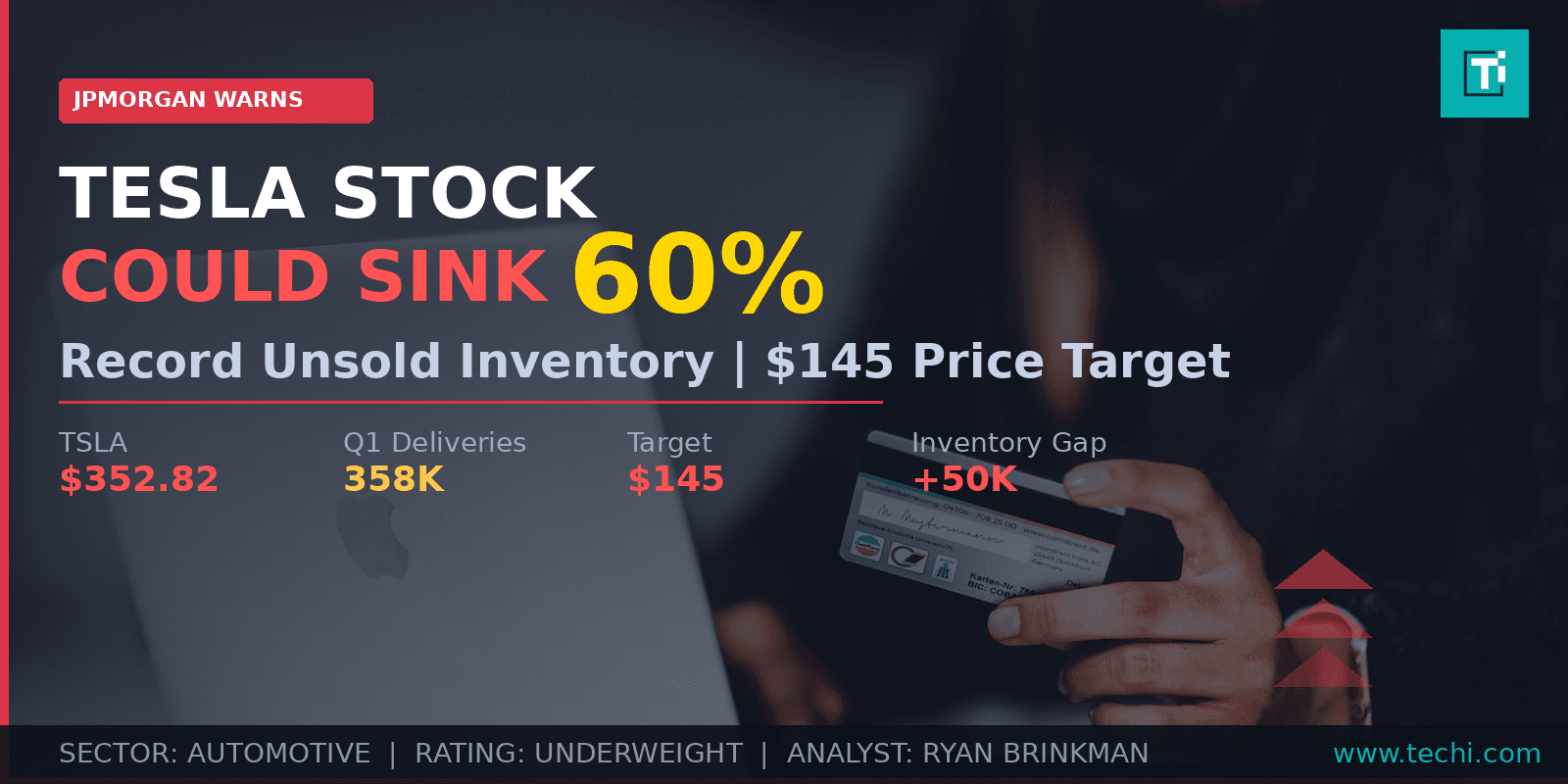
April 2026 low | ~$352.82 |
Musk direct stake (~13%) | ~$168B |
2018 options (304M @ $23.33) | ~$115B intrinsic |
Total Tesla exposure | ~$283B |
The DOGE Factor: The Political Chapter That Cost Tesla
Musk’s stint running the Department of Government Efficiency (DOGE) under President Trump was the most polarizing chapter of his public life, and it left a mark on Tesla. The stock peaked at $479 in December 2024 on post-election optimism, then shed nearly half its value through 2025 as consumer backlash built — vandalized dealerships, a European sales collapse, and surveys showing most American adults held a negative view of Musk personally. Tesla’s own filings conceded that "political sentiment" could hurt the company.
Musk stepped back from the day-to-day DOGE role back in the spring of 2025 to refocus on Tesla, and the stock’s subsequent climb from its spring low suggests the market had been pricing the political distraction as a liability. The deeper lesson is structural: Musk’s visibility is simultaneously his biggest marketing asset and his biggest brand risk, and the two pull in opposite directions for a company that sells consumer cars.
The Net Worth Milestones: A Timeline Without Precedent
Milestone | Date | Primary Driver | Gap From Prior |
|---|---|---|---|
$100 Billion | August 2020 | Tesla’s COVID-era stock surge | — |
$200 Billion | September 2021 | Tesla momentum; S&P 500 inclusion | 13 months |
$300 Billion | November 2021 | Tesla peaks above a $1T market cap | 2 months |
$400 Billion | December 2024 | Post-election Tesla rally; SpaceX revalued | 37 months |
$500 Billion | October 2025 | Tesla $479 ATH; SpaceX above $350B | 10 months |
$600 Billion | December 2025 | SpaceX nears $1T; Tesla comp restored | 2 months |
$800 Billion | February 2026 | SpaceX–xAI merge at $1.25T | ~2 months |
$1 Trillion | June 12, 2026 | SpaceX IPO (SPCX) lists at ~$1.77T | ~4 months |
The shape of the curve is the story. It took three years to go from $300 billion to $400 billion. It took about four months to go from $800 billion to a trillion. Almost none of that final leg came from Tesla — it came from repricing SpaceX, first in the private merger and then in the public IPO. Musk’s ascent to the trillion-dollar mark is, more than anything, a referendum on how the market values a single space-and-AI company.
Crossing $1 Trillion: How the Math Worked
Fortune ran a "world’s first trillionaire" headline back in April 2026 based on implied SpaceX valuations. At the time it was premature — the IPO had not priced. On June 12 the math stopped being hypothetical.
At the $135 offer price, Musk’s SpaceX stake was worth more than $760 billion. Add his ~$283 billion in Tesla equity and options, plus roughly $20 billion across X, Neuralink, and The Boring Company, and the floor sits near $1.07 trillion — already over the line. As SPCX traded above its offer price in the days that followed, Bloomberg marked his fortune up to about $1.23 trillion by June 18. Either figure clears a trillion; the difference between them is simply how generously you mark a stock that has existed publicly for less than a week.
The bear case is now a public-market one rather than a private-valuation guess. If SPCX gives back its IPO premium, or Tesla rolls over, Musk’s fortune could slip back under $1 trillion as quickly as it crossed it — and unlike the private era, the whole world would watch it happen tick by tick.
Musk vs. the World: Wealth in Context
Comparison | Value |
|---|---|
Elon Musk net worth (Bloomberg, Jun 2026) | ~$1.23 Trillion |
Forbes estimate | ~$1.2 Trillion |
Next-richest individual | ~$250–300 Billion |
Musk’s lead over #2 | ~4–5× richer |
GDP of Saudi Arabia (2025) | ~$1.1 Trillion |
GDP of Switzerland (2025) | ~$0.9 Trillion |
GDP of Poland (2025) | ~$0.9 Trillion |
The concentration is the part with no real precedent. Musk is not merely first on the list — he is roughly four to five times richer than the next person on it, a gap that has never existed at the top of the global rankings. His fortune now exceeds the annual economic output of Saudi Arabia. Whatever one thinks of how it was built, a single individual holding more wealth than the GDP of a G20-adjacent economy is a genuinely new fact about the world.
The Risks Behind a Trillion-Dollar Fortune
- It is paper, not cash. Roughly 70% of Musk’s wealth is now newly public SPCX stock he largely cannot sell during the post-IPO lock-up (typically 90–180 days). His net worth and his available capital remain two very different numbers.
- SPCX is now a public stock that can fall. The IPO turned a private mark into a market price. That price can re-rate down as fast as it re-rated up — and now the entire decline would be public and measurable, not smoothed by private rounds.
- Tesla’s rebound may be sentiment, not fundamentals. Q1 2025 profit fell 71%, and the stock’s recovery leans on robotaxi optimism and the SpaceX halo. Brand damage from the political chapter, plus BYD and legacy EV competition, has not gone away.
- Key-man risk at unprecedented scale. No one has ever had a trillion-dollar fortune tied this directly to personal involvement across Tesla, SpaceX, xAI, X, Neuralink, and The Boring Company. Musk’s attention is the scarcest input in his empire, as the DOGE detour demonstrated.
- Regulatory and litigation exposure. Ongoing SEC scrutiny of Tesla disclosures, questions around X, European content-moderation pressure, and the long tail of his political role all create an environment where a single adverse ruling could shift sentiment across both his public and his now-public holdings.
A note on this analysis: This article is for information only and is not investment advice. Net-worth estimates vary by source and methodology — Forbes and Bloomberg can differ by hundreds of billions depending on how they value private and newly public stakes — and the figures here move with the prices of TSLA and SPCX. Confirm current numbers before making any financial decision.
FAQ
Frequently asked questions
What is Elon Musk’s net worth in 2026?
As of June 18, 2026, the Bloomberg Billionaires Index estimated Elon Musk’s net worth at roughly $1.23 trillion, and Forbes put it near $1.2 trillion. He became the world’s first trillionaire on June 12, 2026, the day SpaceX listed on the Nasdaq as SPCX. Estimates vary by source — and by the day — because so much of his fortune is tied to the share prices of SpaceX and Tesla.
Is Elon Musk a trillionaire?
Yes, on paper. Musk crossed $1 trillion on June 12, 2026, when SpaceX’s IPO valued the company near $1.77 trillion and his stake at more than $760 billion. He is the first person in recorded history to reach that mark. The important caveat is liquidity: most of that wealth is freshly public SpaceX stock he largely cannot sell during the post-IPO lock-up, plus Tesla shares — not cash.
How did Elon Musk become a trillionaire?
The SpaceX IPO. On June 12, 2026, SpaceX priced its offering at $135 per share for a valuation near $1.77 trillion and raised about $75 billion — the largest IPO in history. Musk’s roughly 42% stake (in a company that had absorbed xAI in a February 2026 merger) was worth more than $760 billion on its own, pushing his total fortune past $1 trillion. A Tesla recovery to about $400 and his restored 2018 option package added the rest.
How much of Musk’s wealth is SpaceX versus Tesla?
After the IPO, SpaceX is the dominant asset — about 70% of Musk’s net worth, worth more than $760 billion at the offer price (and it now contains xAI). Tesla accounts for roughly $283 billion: about $168 billion in direct equity plus around $115 billion in intrinsic value from his 2018 options. X, Neuralink, and The Boring Company together make up the remaining low-single-digit percentage.
What are the risks to Musk’s trillion-dollar net worth?
Mainly that it is paper wealth. Around 70% sits in newly public SPCX stock subject to IPO lock-ups, so Musk cannot freely sell it, and the price can fall now that it trades publicly. Tesla’s rebound leans on robotaxi optimism more than fundamentals (Q1 2026 profit fell 71%), and his fortune is uniquely concentrated and tied to his personal involvement across six companies. A pullback in TSLA or SPCX could drop him back under $1 trillion as fast as he crossed it.

Disclaimer
This article is for informational purposes only and does not constitute financial, investment, tax, or legal advice. Market data, tax rules, and prices can change after the article date. TECHi and its authors may hold positions in securities or digital assets mentioned. Always conduct your own research and consult a licensed financial, tax, or legal professional before making decisions.
About the Author

Fatimah Misbah Hussain reports on the money behind AI and chips: Samsung raising foundry prices while losing share, Alphabet's first quarter of AI cash burn and the roughly $10 billion financing stack behind Korea's sovereign AI factory. US sanctions on crypto exchanges and X's new payouts for original posts are also part of her beat.


Comments